How to Choose Educational Toys for 2-Year-Olds by Skill

Summary
Choose educational toys for 2 year olds by skill: language, hands, movement, problem solving, pretend play, and sensory. See what to look for and piece size.
Choose a toy for a 2-year-old by the skill they are already practicing, not by the word “educational” on the box. A few blocks, a book, a doll, a large ball, and a pot cover more of this year than a pile of new toys. A toy can invite practice. It cannot guarantee a milestone.
This page is the age-2 shelf, about 24 to 36 months. The age-1 shelf, about 12 to 24 months, is in educational toys for 1-year-olds. The age-3 shelf is in educational toys for 3-year-olds. The wider buying test, from babies through school age, is in the guide to choosing educational toys. Household jobs that use a cup, a sock, or a cloth, with no new toy, are in Montessori-inspired activities for 2-year-olds.
What most 2-year-olds are practicing
The CDC Learn the Signs. Act Early. checklists describe what most children, 75% or more, do by a given age. They are not a shopping list or a screening test. The CDC says that on its key points page, and each age page says the materials are not a substitute for a validated screening tool.
By 2 years, most children say at least two words together, point to a picture in a book when you ask, and point to at least two body parts. Most kick a ball, run, walk up a few stairs, and eat with a spoon. Most hold something in one hand while the other hand works, try switches or knobs, and play with more than one toy at once, such as putting toy food on a toy plate. Most notice when someone is hurt or upset, and look at your face to see how to react in a new situation. Those lines are on the CDC 2-year checklist, reviewed 16 May 2026.
By 30 months, most children say about 50 words, say two or more words together with an action word, and use words like “I,” “me,” or “we.” Most play next to other children and sometimes play with them. Most use things to pretend, such as feeding a block to a doll, follow a two-step instruction, and show they know at least one color. Most jump off the ground with both feet, twist a doorknob or a lid, turn book pages one at a time, and take off some loose clothes. Those lines are on the CDC 30-month checklist, reviewed 16 May 2026.
A child who just turned 2 and is not jumping yet is still inside that picture. Kicking and running are the 2-year movement lines. Jumping with both feet is the 30-month line. Match the toy to the child in front of you. If a skill has been lost, or you are worried, the CDC says to talk with the child’s doctor and ask about developmental screening.
| Skill | What you watch them do | Look for | Leave behind |
|---|---|---|---|
| Language | Two words together, then a short phrase, pointing in a book | A picture book, a doll you can talk about | A toy that says every line for them |
| Fine motor | Spoon, twist a lid, turn one page, scribble | Large pieces, a chunky crayon, one simple lid | Beads, coins, loose magnets |
| Gross motor | Run, kick, then jump with both feet | A soft ball much larger than 1.75 inches, a clear floor | Trampolines, balloons, ride-ons aimed at stairs |
| Problem solving | Two hands on a lid, a knob, a shape that fits | A few blocks, a puzzle with large pieces | A 100-piece kit, marble runs |
| Pretend play | Toy food on a plate, a block fed to a doll, a hat | One doll, one pot, one hat | A 40-piece set with a script |
| Sensory | Sand or water with a cup, paint on paper, one texture | One material, you beside them | Rice bins, water beads, glitter |
NAEYC’s notes on toys for 2-year-olds point to problem-solving materials, pretend and building, art, picture books, and large-muscle play. The same page says each child develops at their own pace, and that a safe toy from another age list can still fit. That is the filter for every row.
What to look for at this age
The American Academy of Pediatrics, on HealthyChildren.org, says the best toys match the skills a child has now, and that no single toy is required for the next milestone. ZERO TO THREE says to choose open-ended toys a child can use in more than one way, such as blocks that become a road, a bridge, or a zoo, and toys that still work as the child changes. The same page says the more a toy does on its own, the less the child has to do.
Use three questions before you buy:
- Can the child do the main action today, without you placing every piece?
- Can the same toy be a tower, a road, or part of a story?
- Is every separate piece too big to fit in the small-parts cylinder described below?
A yes on all three is a better buy than a box that lists six skills. Digital toys and apps should not replace face-to-face play. HealthyChildren.org says that, and it says screen time should be avoided under age 2 and kept to less than 1 hour a day from age 2. The longer screen note is in balancing screen time.
Piece size, because they are still under 3
A second birthday does not end the under-3 choking rule. Toys intended for children under 3 that present a choking hazard because of small parts are banned. A small part is any object that fits entirely, without compressing and in any orientation, into the small-parts cylinder: 2.25 inches long by 1.25 inches wide (57.10 mm by 31.70 mm). That includes a whole toy, a separate piece, and a piece that breaks off in use-and-abuse testing. The rule is 16 CFR part 1501.
A label of 3+ often means small parts are allowed. Keep that toy for after the third birthday, and longer if the child still mouths toys. The AAP’s choking prevention page says babies and toddlers are at the highest risk because they put things in their mouths, and that balloons, balls, marbles, pieces of toys, and small round foods cause the most choking deaths. Its safe-toy tips say to make toys and parts larger than the child’s mouth, to read the age label, and to avoid button batteries and high-powered magnets. NAEYC’s 2-year list includes puzzles, snaps, and other smaller objects, and its safety note says toys for children under 3 should have no small parts or pieces that could become lodged in a child’s throat. The cylinder is the line for that phrase. The same AAP safe-toy page says to avoid stuffed toys filled with small bean-like pellets.
A ball intended for children under 3 is banned if it passes, under its own weight, entirely through a circular hole 1.75 inches (44.4 mm) across. That rule is 16 CFR 1500.18(a)(17). Use a soft ball you can see is much bigger than that hole. The AAP choking page says balloons are a choking risk through age 8. Uninflated or broken latex balloons stay out. The CPSC small-parts labeling FAQ lists them as a choking-hazard category.
Skip toys with a button battery or high-powered magnets. The CPSC magnet page describes the injury risk if magnets are swallowed. Water beads stay out. The CPSC water-bead alert says to remove them from places with children 3 and younger. Books, crayons, and similar writing materials are exempt from the small-parts ban, because they cannot be made so they never break into bits. The exemption is not a promise that a bitten crayon is safe. Stay beside a child who chews them. Household objects are not tested like toys. If a bead, bean, or lid would fit in the cylinder, do not hand it over.
Check seams, eyes, and battery doors after the toy has been dropped and washed. NAEYC notes that ordinary wear can turn a safe toy into a hazard, and it points caregivers to the CPSC recall list.
Language
At 2, the language toy is usually a book or an object you can name while they try a phrase. You still supply the fuller sentence. The CDC 2-year tips say that if a child says “or nana,” you can answer “You want more banana.” By 30 months most children name a picture when you point and ask “What is this?” and say about 50 words. ZERO TO THREE says most toddlers this age use two-word phrases, and that by age 3 some use three-word phrases. Those are descriptions of what many children do, not a quota for your child.
How to read the book is its own skill, in reading aloud. Letter drills and loose magnetic letters can wait. Magnets are in the safety section above. Rhymes and first sounds fit better near ages 4 and 5, in reading readiness activities.
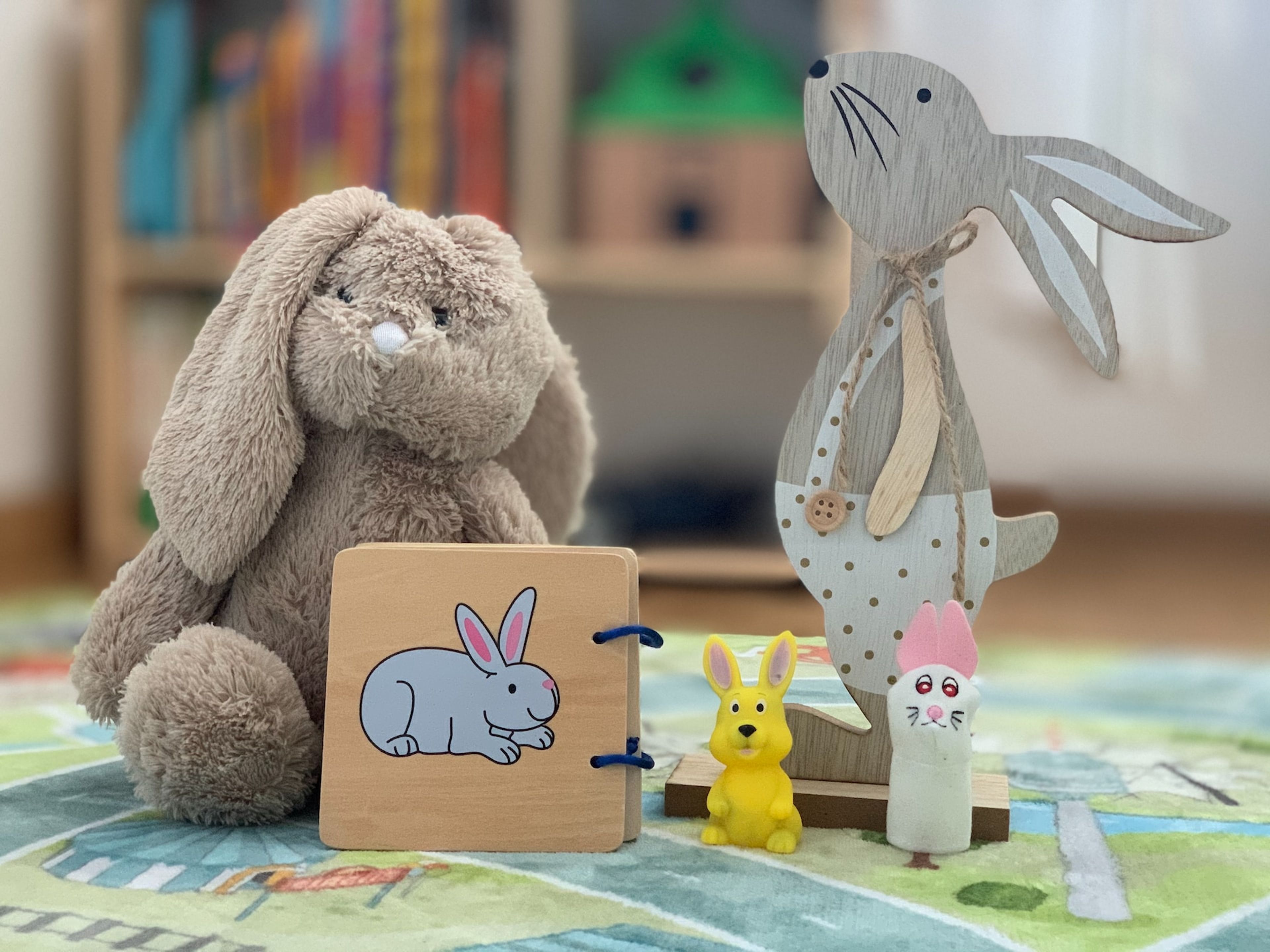
Look for: a picture book with more detail than a first board book, sturdy pages they can turn, a doll or animal you can talk about. If a flap tears off and fits in the cylinder, that book is done.
Skip: a toy that speaks every line so the child never has to try a word. ZERO TO THREE says a toy the child can sit and watch perform is more entertainment than a learning toy, and that lights or music with no clear action make cause and effect harder to see.
Fine motor
The useful hand toy at this age gives the fingers a repeated job: scoop with a spoon, twist a large lid, turn one page, scribble. By 2 years most children eat with a spoon. By 30 months most twist knobs or lids, turn pages one at a time, and take off some loose clothes. The CDC 2-year tips suggest crayons or finger paint on paper, and hanging the page where the child can see it. ZERO TO THREE says some toddlers this age start to hold a crayon with thumb and finger instead of a fist, and start to control the stroke. That is a description, not a test you need them to pass.
The household versions, with cups and paper, are in fine motor activities for toddlers. Stringing large beads is on the CDC 3-year checklist, not this one. NAEYC lists blunt-tip toddler scissors among art tools for 2-year-olds. Stay beside them if you offer a pair, and skip them if the child still puts tools in their mouth.
Look for: blocks you can see across the room, one large lid on a wide container, a short chunky crayon, a puzzle whose every piece fails the cylinder test.
Skip: beads, coins, lacing sets, and puzzle knobs that unscrew into a small part. Preschool hand toys, including lacing once the pieces are truly large, are in fine motor toys for preschoolers.
Gross motor
By 2 years most children kick a ball, run, and walk up a few stairs with or without help. By 30 months most jump off the ground with both feet. The CDC 2-year tips say to give balls to kick, roll, and throw, and to play outside. The CDC 30-month tips add kicking a ball back and forth, then running up to kick it, and climbing on playground equipment in a safe area with you there.
Toy types for that movement, from about 12 to 36 months, are already sorted in gross motor toys for toddlers: push toys, large soft balls, ride-ons the child moves with their feet, tunnels, and low climbers. NAEYC’s 2-year list includes large and small balls, ride-on equipment, tunnels, and low climbers with something soft underneath, and it says tricycles are probably a better fit from about age 3. Rainy-day floor games that do not need a purchase are in indoor gross motor activities.
Look for: a soft ball much larger than the 1.75-inch hole, a clear path that does not end at stairs, a low climber you can reach.
Skip: trampolines, balloons, and any ride-on pointed at a doorway or stairs. One ball and a clear floor are enough until the next movement shows up.
Problem solving
Problem solving at 2 is a small physical puzzle, not a worksheet. By 2 years most children hold one thing while the other hand takes a lid off, and most try switches, knobs, or buttons. The CDC 2-year tips suggest toys where the child pushes a button and something happens, simple puzzles with shapes or animals, and blocks you take turns stacking and knocking down. By 30 months most children follow a two-step instruction, show they know at least one color, and show simple problem solving, such as standing on a small stool to reach something. The stool example is a milestone, not a toy to buy. You still keep climbable furniture stable and in reach.
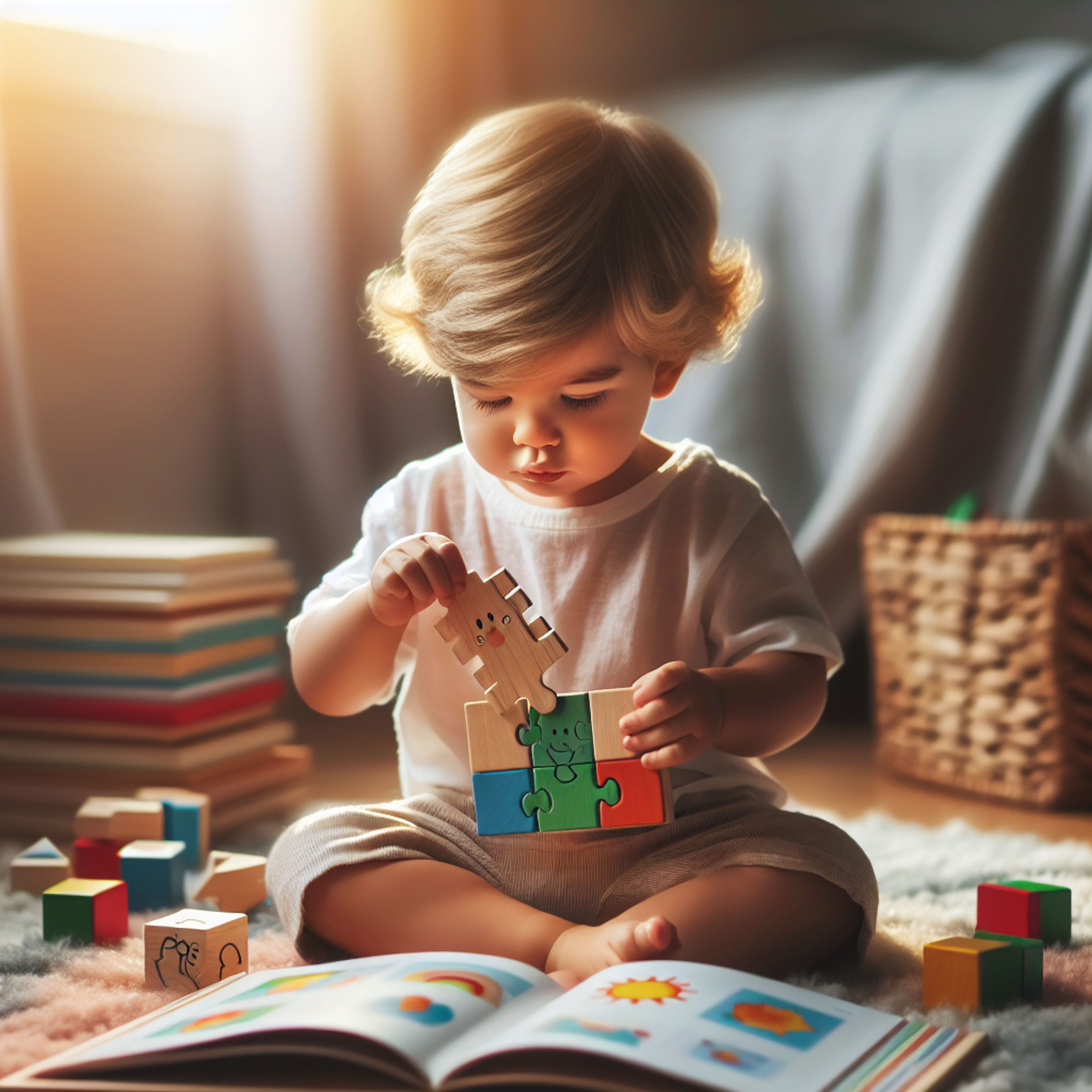
ZERO TO THREE describes sorting, trying one puzzle piece in more than one space, and turning a piece to see if it fits. NAEYC’s 2-year problem-solving list includes wood puzzles of about 4 to 12 pieces, blocks that snap together, and objects to sort by size, shape, or color. Every loose piece still has to fail the cylinder test. A handful of large blocks can be the whole set.
Questions such as “which tower has more?” fit better from about age 3, in preschool STEM activities. A build with one finish line, as a concentration toy, is in toys for concentration.
Look for: a modest set of blocks, a puzzle of a few large pieces, a sorter whose pieces come back out, one large knob or button the child presses.
Skip: marble runs, fingertip building bricks, and a battery door they can open. If the toy plays a whole song after one press, it has left the problem-solving shelf.
Pretend play
Pretend at 2 is a short copied routine, then a prop that stands in for something else. By 2 years most children play with more than one toy at the same time. The CDC 2-year tips suggest dress-up with grown-up clothes, such as shoes, hats, and shirts. By 30 months most children use things to pretend, such as feeding a block to a doll as if it were food. ZERO TO THREE says that between 2 and 3, toddlers act out a familiar routine with a doll, a blanket, or a bottle, and that a pillow can become a pizza once they use a symbol. You let them choose the play, then add one idea, such as “Where is the bus going?” Then you stop.
NAEYC groups dolls, dress-up, puppets, play food, and child-sized pretend furniture with the 2-year list. Longer household scenes for age 3, with a pot, a doll, and a hat, are in pretend play ideas for 3-year-olds. Feeling words for the same doll are in social-emotional toys.
Look for: one doll with embroidered features, one pot and a spoon that does not fit in the cylinder, a hat or a shirt with no loose buttons, play food pieces too big to swallow.
Skip: a 40-piece pretend set, eyes that unscrew, and any script the toy recites so the child only watches. If they only want to be the cook, let them be the cook.
Sensory
One material is enough. The CDC 2-year tips suggest sand toys or plastic cups, spoons, or a funnel in the tub or a sandbox, and crayons or finger paint on paper. ZERO TO THREE includes sand and water play, and dough or clay, among open-ended materials. Stay for water. The American Academy of Pediatrics says on HealthyChildren.org that young children can drown in as little as an inch or two of water, and that filled buckets should be emptied after use. Use a shallow tray, not a bucket of water, and empty it before you leave the room.
Store-bought dough they are not eating is a better fit than raw flour. The activity list, and what to leave out of a bin, is in sensory play for toddlers. How to tape a bottle shut, and why glitter stays out, is in DIY sensory bottles.
Look for: cups and a spoon in a sandbox you are watching, paint on paper, one piece of cloth, dough from a shop.
Skip: dry rice, beans, pasta, water beads, and glitter. A sandbox is not a rice bin. Pieces that belong in the cylinder do not become safe because they are in a tub.
Toy ideas by type
These are types, not products. No brand, price, or rating belongs in this list. Use it later as a slot for a specific pick, after the piece-size check above.
| Toy type | Skill it invites | Piece-size note |
|---|---|---|
| Large blocks | Stack, sort, pretend | Nothing that fits in the cylinder |
| Wood puzzle, about 4 to 12 pieces | Try a piece, turn it, place it | Every piece too big to swallow |
| Shape sorter | Post a shape, take it out | Every piece too big for the cylinder |
| Picture book | Point, name, turn a page | Retire it if a flap tears off |
| Doll or stuffed animal | Hug, feed, talk | Embroidered features, no loose eyes or bean-pellet stuffing |
| Pot, spoon, and pretend food | Two toys at once, a short routine | Spoon and food too big for the cylinder |
| Hat or loose shirt | Dress-up | No buttons or snaps that come off small |
| Chunky crayon and large paper | Scribble, later a line | Sit with them if they chew the crayon |
| Soft ball | Roll, kick, throw | Must not pass a 1.75-inch hole |
| Ride-on pushed with the feet | Move, steer, stop | Not a tricycle yet; path must not end at stairs |
| Low climber or short tunnel | Climb or crawl | Soft landing, you in reach |
| Cups, a funnel, or a spoon for sand or water | Pour, fill, dump | Empty water before you walk away |
| One large knob or button | Cause and effect | No battery door they can open |
A kitchen pot can stand in for the pretend row. A book you already own can stand in for the language row. Buy when that type is missing, cracked, or too small, not because the table has an empty cell.
How many toys, and how to play together
There is no official correct number of toys for a 2-year-old. One study of 36 toddlers compared supervised free play with 4 toys and with 16 toys. With fewer toys, children played longer with a single toy and used toys in more ways (Dauch and colleagues, Infant Behavior and Development, 2018). That was one pair of sessions, not a rule for a whole cupboard. It is a reason to put out a few toys, not every toy. ZERO TO THREE makes the same point from the other direction: a useful toy asks the child to do something, and packaging that promises to make a baby smarter is not backed by the research.
ZERO TO THREE also says you are still the child’s most important playmate. Let them choose the toy. Add one line, such as where the bus is going, or one turn with the blocks. Then hand the play back. HealthyChildren.org says a certain toy is not necessary for the next milestone. You are the part that does not come in the box.
Other children are a new skill, not a reason to buy a turn-taking game yet. The CDC 2-year tips say children this age play next to each other and do not yet know how to share or solve a conflict. Stay close on a playdate. Show a turn, help them use a word, and keep the set small so there is less to fight over. By 30 months most children play next to other children and sometimes play with them. The CDC 30-month tips say to show sharing and turns, and to offer play with other children at a park, a library, or a playgroup. Cooperative games with a shared goal fit better a little later, in cooperative play toys.
Start with what is in the house: a book, a ball, a doll, a crayon, and a few blocks. The activity posts linked above are the no-purchase versions. Check the maker’s age label, then check the child. A label of 2 years means the product was graded for that age. It does not mean this child is done putting things in their mouth.
Frequently asked questions
What educational toys does a 2-year-old need?
A few they will use: something to stack or fit, something to kick or climb on a low structure, a picture book, a doll or a hat, and one sensory material that is not a choking hazard. Match the toy to the skill you see this month. The CDC lists are a reference for what most children do, not a cart.
Are electronic learning toys a good buy at age 2?
Usually no, when the toy talks through the whole game. ZERO TO THREE says the more the toy does, the less the child has to do, and HealthyChildren.org says digital toys should not replace face-to-face play. A single large button the child presses can still be a cause-and-effect toy.
What if my 2-year-old still mouths toys?
Keep the under-3 size rule until mouthing stops, even after the third birthday. Large pieces only. No water beads, no beads, no loose magnets, no balloons, no button batteries. A 3+ label is a reason to wait, not a reason to size up early.
Do I need a separate toy for each skill?
No. Blocks can be a tower, a road, and a cake in a pretend game. A doll can be pretend play and a reason to talk. The table is a way to notice a gap, not a requirement to own six categories.
How many toys should be out at once?
There is no required total. In the Dauch study, toddlers played longer and in more ways with 4 toys in the room than with 16. Put out a small set for the skill they are repeating this week. Leave the rest put away.
How is this different from the age-1 page, the age-3 page, and the main toy guide?
The age-1 page is about 12 to 24 months: first words, stacking two, cruising, and a first hug of a doll. The age-3 page is the third year: stringing large beads, drawing a circle after you show one, and joining other children. The age-4 page, educational toys for 4-year-olds, is later: rhymes, counting, catching a large ball, and a role they stay in. The main guide is the buying test for every age. This page is only about 24 to 36 months, with two-word phrases, simple puzzles, pretend props, parallel play, and the under-3 piece-size rule still in force. Household jobs for the same age, without a toy purchase, stay on the Montessori activities page.
What to try first
Watch one play session. Write down the skill they repeat: two words and a book, kicking a ball, fitting a large puzzle piece, feeding a doll, or pouring. Get or pull out one toy for that skill. Leave the other rows for another week.
Then read the matching post linked above if you would rather not buy. Use the age-1 page if they are not yet 2, and the age-3 page once small parts are actually appropriate. The educational toys guide is the full buying test if you want it beside this shelf.