8 Cooperative Play Toys That Help Children Practice Sharing
Summary
Find eight cooperative play toys for children that support sharing, turn taking, joint planning, communication, and accessible group play.
TL;DR
- Choose toys with one shared outcome, such as a tower, puzzle, song, or pretend shop.
- Clear roles and short turns make sharing easier to understand.
- Large-piece building sets, cooperative games, puzzles, music toys, and movement activities offer practical ways to practise waiting and communicating.
- Check safety guidance, accessibility, and each child’s comfort before setting up group play.
Children practise sharing more naturally when a toy gives them a reason to need one another. Cooperative play toys for children create shared goals, shared materials, or repeated chances to wait, respond, and make a decision together. The Pennsylvania Early Learning Standards describe play as a setting where children construct, organise, and apply knowledge, while the ECTA Center recommends responsive adult interaction that extends children’s engagement and peer exchanges.
Why cooperative play toys give sharing a real practice space
Playing beside another child isn’t always cooperative play. The activity becomes cooperative when children must communicate, exchange materials, plan together, or take turns to complete one task.
For example, two children can build one tower. One chooses the next block, the other places it, and then they swap roles. Each child contributes, waits, and responds to the other child’s idea. Those repeated actions make these toys that teach sharing and turn taking useful practice tools rather than simple distractions.
How to choose sharing toys that children will actually use together
Start with a toy that has one clear shared outcome. Look for flexible roles, enough materials for both children to contribute, and a play goal they can understand without a long explanation.
- Check the manufacturer’s age guidance, choking warnings, small parts, magnets, and cleaning instructions.
- Choose parts children can hold, see, or access in ways that suit their abilities.
- Begin with short turns and simple phrases: “my turn,” “your turn,” and “we can do it together.”
- Give children time to respond before stepping in. The ECTA Center’s interaction guidance supports adult responses that extend shared engagement instead of taking over the exchange.
1. Cooperative board games with one shared goal
Choose a simple game where children work against a shared challenge instead of trying to beat one another. Moving one shared piece, passing cards, or deciding together creates a clear turn structure.
For example, one child draws a card, the other chooses where it goes, and both check the board before the next turn. These cooperative board games for kids work best when the rules fit the children’s attention span and the pieces are easy to handle. Check the product guidance before buying.
2. Building sets for joint designs
Large-piece blocks and age-appropriate construction sets give children a physical project to share. The Pennsylvania Early Learning Standards connect play with constructing, organising, and applying knowledge, which makes building a natural setting for joint planning.
Assign roles such as collecting pieces, planning the base, and placing parts. Ask, “What should we build first, and whose turn is it to add the next piece?” Use large parts for children who need easier gripping, and check restrictions for magnets or small components. Cooperative construction toys should support one shared design, not two unrelated piles.
3. Cooperative marble runs and track sets
Track sets create connected jobs. One child can plan the route while another tests sections, then both can revise the design.
Children might add one section at a time, test the complete run, and change the section that stops the ball. Use large, age-appropriate parts for younger children and supervise every set containing small balls or pieces. Marble run cooperative play suits children who enjoy testing ideas, but the adult should describe the process plainly rather than promise a particular learning result.
4. Pretend-play kits with shared roles
Play kitchens, grocery sets, doctor kits, puppets, and dress-up pieces give children different jobs inside one story. These pretend play toys for sharing let children practise asking, offering, listening, and switching roles.
For example, one child runs the pretend shop while another chooses items. After a short scene, they swap. An adult can add one role or prop without directing the whole story, responding to children’s actions in the way recommended by the ECTA Center. Any child can enjoy any theme; follow interest rather than stereotypes.
5. Large puzzles and floor puzzles for shared problem-solving
Choose a large puzzle with pieces children can safely pass and a picture or frame that supports joint planning. A simple rule keeps one child from controlling the whole activity: each child chooses one piece before the next child searches.
Let children try, request a piece, and negotiate before helping. Check piece size and manufacturer guidance, especially when younger children or children who mouth objects are involved. Cooperative puzzles for children work best when the picture interests everyone and the group can see the shared progress.
6. Parachutes, scarves, and movement toys for group play
A play parachute or large fabric sheet asks children to share physical space and coordinate one movement. Try lifting it together, rolling a soft ball across it, or letting each child choose one movement.
Keep the space clear and supervise loose fabric, crowded movement, and physical contact. Some children may prefer a smaller scarf, a defined standing spot, or the role of choosing commands. The 2025 CoDesign study on creating an inclusive collaborative toy with and for autistic children supports involving children in decisions about participation and access. No single movement activity suits every child.
7. Musical instruments for taking turns and making a group sound
Child-safe drums, shakers, rhythm sticks, and bells can be passed around or assigned different parts. A stop-and-go pattern gives children a clear cue to wait, listen, and join.
For example, one child starts a steady beat, another adds a shaker pattern, and both stop when the adult raises a hand. These musical toys for turn taking should have safe materials and a manageable volume. Use ear protection or a quieter instrument when sound feels uncomfortable, and check the product’s care and safety guidance.
8. Shared gardening, cooking, or sensory-play sets
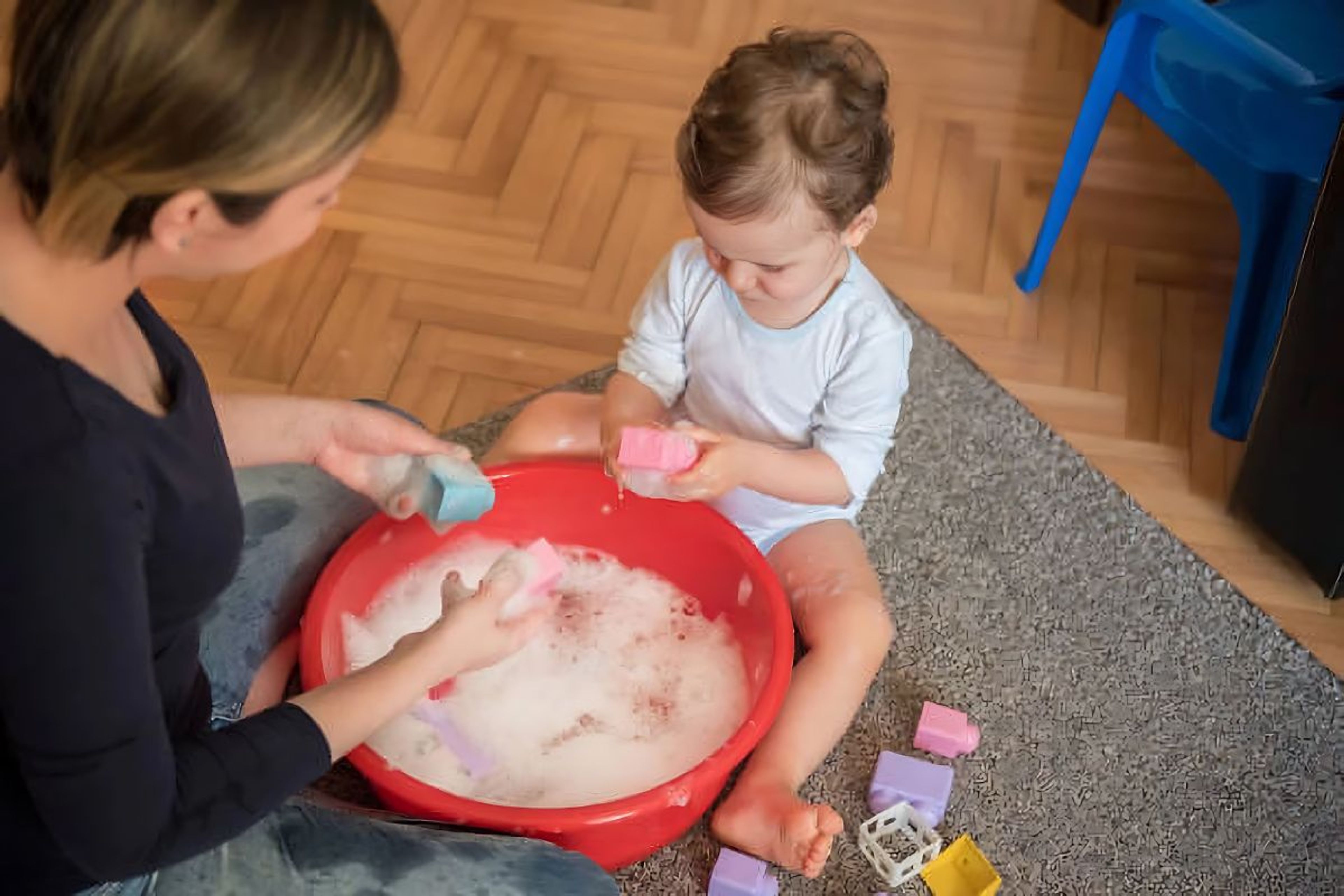
Shared activity toys for children work well when each role affects the next step. Scooping, pouring, sorting, and serving make the turn sequence easy to see.
One child fills a cup, another adds the next ingredient, and both decide when the pretend recipe or garden tray is ready. Supervise real cooking, water, tools, soil, and small sensory materials closely. Pretend versions have different safety needs, but they still require checks for loose parts, materials, and access. These toys that teach sharing and turn taking can also be adapted by changing the size of a tool or assigning a non-touch role.
How adults can make sharing easier during toy play
Adults set the tone by making the next action predictable. Model short phrases, name whose turn comes next, and pause long enough for children to answer or act. The ECTA Center’s interaction resource supports responsive exchanges that extend children’s engagement with one another.
When two children want one popular piece, use a visible timer, a turn card, or an agreed number of actions. “You can place two pieces, then Sam chooses” is clearer than “Be nice and share.” Praise the action you saw:
- “You passed the blue block when Mia asked.”
- “You waited while Noah finished.”
- “You changed the plan together.”
Reluctance to share can signal that the turn is too long, the rules are unclear, or the child needs another way to participate. Adjust the setup before treating the response as deliberate misbehaviour.
Choosing the right first cooperative toy for your child
The best cooperative play toys for children match an existing interest. Start with building, music, pretend play, puzzles, or movement, then introduce one shared goal and one turn-taking rule.
- Shared purpose: Can children work toward one result?
- Manageable rules: Can you explain the first turn in one sentence?
- Safe parts: Do the size, materials, and age guidance fit the children?
- Flexible roles: Can children contribute through choosing, holding, watching, speaking, or doing?
- Access: Can every child reach, understand, and comfortably join the activity?
Introduce the toy, demonstrate one rule, and watch what happens. Change the turn length, roles, or materials according to the children’s responses. Inclusive toy selection works best when children’s preferences and access needs shape the setup, a point also explored in the 2025 CoDesign research.
Age, safety, and open-ended play are covered in the complete guide to choosing educational toys for child development.