The Complete Guide to Choosing Educational Toys for Child Development
Summary
Learn how to choose safe, age-appropriate educational toys that support learning through play, from baby sensory toys to open-ended toys for preschoolers.
A toy can look clever on a shelf and still be a poor match for the child who receives it. A flashing button toy may frustrate a baby who is still learning to grasp, while a complicated construction set may sit untouched because a preschooler needs simpler pieces and more room for pretend play. The better starting point is the skill your child is practicing now, followed by age guidance, safety, supervision, and genuine interest.
Quick answer: Choose educational toys for child development that invite a child to act, repeat, communicate, and make choices without constant correction. Start with one developmental goal, check the manufacturer’s age guidance, inspect the toy for hazards, and prefer materials that support more than one kind of play.
A good toy creates a useful invitation to play; it never guarantees a developmental result.
How educational toys support child development through play
A toy earns its learning value through the actions it invites. During play based learning, children test ideas, make choices, use language, solve small problems, and repeat actions until they understand what happens next. UNICEF’s Global Report on Early Childhood Care and Education connects early learning with the quality of children’s everyday relationships and experiences, including play.
That does not mean every toy produces the same result for every child. A child’s interest, current abilities, access to an adult, and freedom to explore all shape the experience. A toy can offer practice, but it cannot guarantee a milestone, raise intelligence, or replace responsive conversation and ordinary movement.
Consider a set of wooden blocks. A young toddler may grasp, carry, bang, and stack two pieces. Those actions give the hands repeated practice while the child hears words such as “up,” “down,” “big,” and “again.” Later, the same blocks can support comparing heights, planning a bridge, inventing a road, telling a story, and solving a balance problem with another child.
NAEYC’s guidance on good toys by age and stage points caregivers toward materials that support active, imaginative play. That principle makes shopping simpler: look for what the child can do with the toy, rather than trusting the word “educational” printed on the package.
Match the toy to the skill your child is practicing
Choosing by skill prevents a common buying mistake: selecting a toy because its label sounds impressive. The same product category can work well for one child and miss the mark for another, so watch what your child tries, repeats, avoids, and asks you to do.
The CDC describes milestones across how children play, learn, speak, act, and move. Its developmental milestone guidance can help you understand broad age-related abilities, but milestones are observations, not a shopping schedule or diagnosis.
- Fine motor skills: Large stacking pieces, chunky puzzles, peg boards, and washable art materials invite grasping, releasing, turning, pressing, and placing. A toddler fitting three large puzzle pieces can repeat the hand movement without needing a perfect first attempt. For preschool practice, see fine motor toys for preschoolers.
- Gross motor skills: Push toys used according to safety guidance, soft balls, tunnels, balance paths, and simple movement games encourage reaching, walking, squatting, throwing, and changing direction. Leave enough clear floor space for the child to move safely.
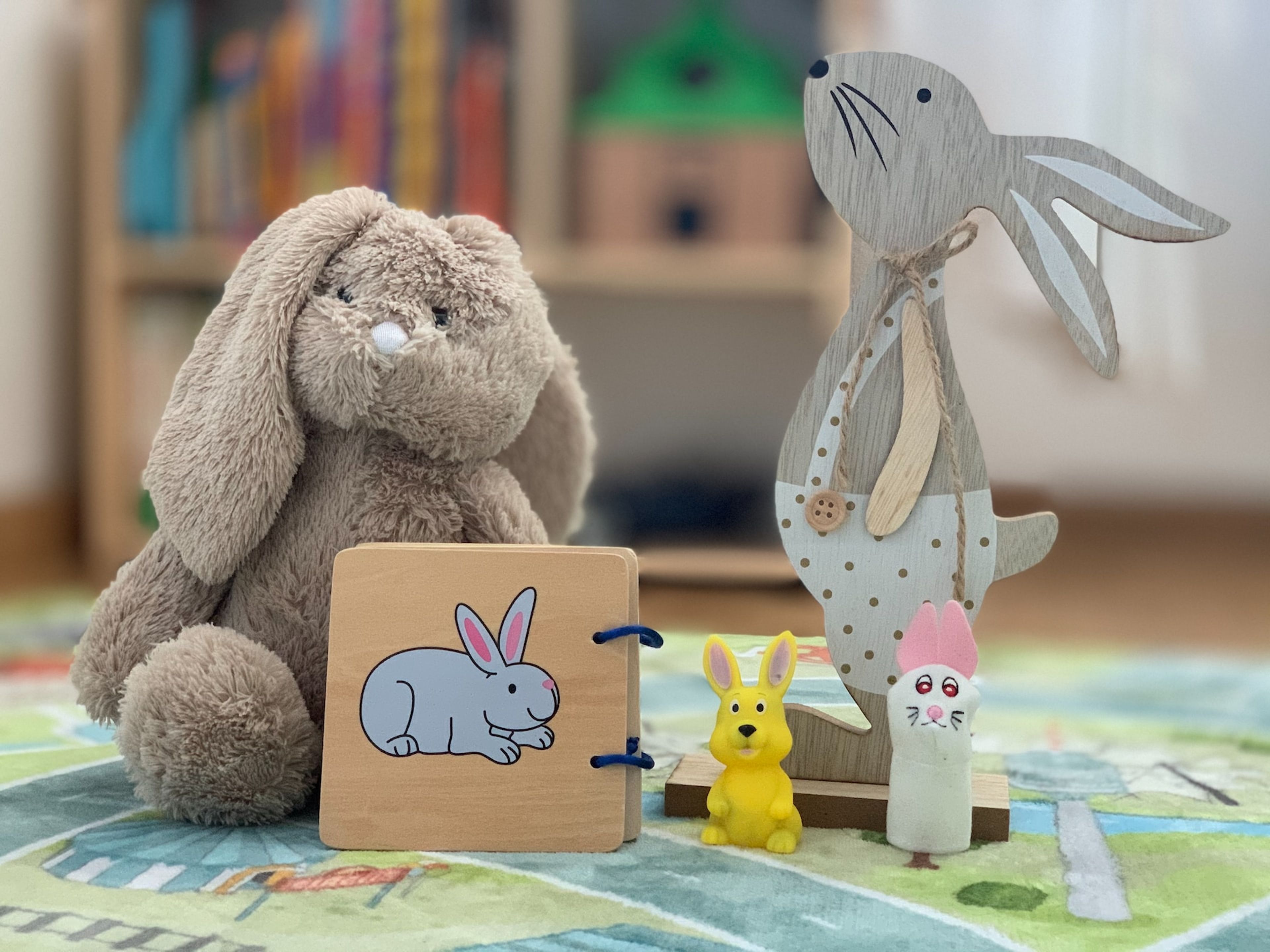
- Language: Board books, dolls, animal figures, puppets, and pretend-play props give children reasons to name objects, describe actions, answer questions, and tell stories. A farm becomes more useful when a caregiver adds “Where is the cow going?” instead of simply testing the child on labels.
- Early thinking and math: Sorting objects, matching cards, nesting cups, blocks, and counting materials support comparison, sequence, shape, quantity, and cause and effect. Use real actions: “You have two red pieces. Which tower has more?” Home versions of those questions are in preschool STEM activities.
- Social and emotional skills: Dolls, puppets, cooperative games, and pretend kitchens allow children to rehearse care, turn-taking, waiting, negotiation, and emotional language. A child may make a puppet comfort a frightened animal before discussing a similar feeling in real life. Group play with a shared goal is covered in cooperative play toys that help children practice sharing.
- Sensory exploration: Water, textured fabric, play dough, safe sound-making materials, and movement activities give children information through touch, sound, sight, and body position. Follow the child’s response rather than assuming every child enjoys mess or loud noise.
Use a three-question selection test before buying:
- What skill can the child attempt with this toy today?
- Can the child explore it without an adult correcting every move?
- Does it allow repetition, variation, or more than one possible result?
A toy that passes all three questions has a better chance of supporting child development through play than a toy with a long list of printed claims.
Choose the action a child can practice today, then let interest decide how far the play goes.
Use educational toys by age without treating age labels as rigid rules
Age guidance helps you screen for safety and expected ability, but it cannot describe every child. Read it beside your child’s coordination, attention, curiosity, communication, and need for supervision. CPSC guidance also makes age grading relevant to hazards such as small parts, so never ignore the manufacturer’s current warning simply because a child seems advanced.
For babies, look for simple objects with safe textures, easy grasping, strong visual contrast, and clear cause-and-effect possibilities. A soft rattle or a securely constructed grasping toy can invite reaching, holding, shaking, and looking. Avoid toys with detachable small parts, loose pieces, accessible batteries, or materials that can break into pieces. Stay close during play, especially when a baby mouths objects.
For toddlers, useful learning toys for toddlers often include large stacking pieces, chunky puzzles, board books, pretend-play props, simple matching materials, and movement toys. A toddler may stack cups, knock them down, fill them with large objects, or turn them into pretend food. That repeated variation is more useful than expecting the child to complete a puzzle once and move on.
Preschoolers can usually handle more complex construction materials, art supplies used with supervision, story props, sorting games, early counting materials, and cooperative games with simple rules. A four-year-old might build a house, draw its residents, assign roles, and negotiate with a sibling about who enters the “door.” The toy supports several areas because the child supplies the story.
Early school-age children may enjoy construction challenges, strategy games, reading materials, science activities, crafts, and problem-solving sets. These materials can extend curiosity beyond school tasks, but they do not replace instruction, rest, outdoor movement, or conversation.
| Age and stage | Look for | Check before use |
|---|---|---|
| Babies | Easy grasping, safe textures, contrast, simple cause and effect | No detachable small parts; close supervision |
| Toddlers | Large stacking pieces, chunky puzzles, books, pretend play, movement | Pieces must remain too large to pose a choking risk; inspect for breakage |
| Preschoolers | Construction, art, sorting, counting, stories, simple cooperative games | Match complexity to coordination and attention; supervise tools and materials |
| Early school age | Strategy, reading, science, craft, construction, problem solving | Review batteries, magnets, cords, and instructions for intended use |
NAEYC offers age-and-stage toy guidance, while the CDC milestone pages give broad developmental reference points. Use both as context, not as a rigid timetable. A child who is not interested in a suggested toy may need a different entry point, more time, or simply another kind of play.
Choose open-ended toys that grow with the child
Open ended toys have multiple possible uses and no single script to follow. Blocks, age-safe loose parts, play silks, magnetic tiles, art supplies, and pretend-play materials can change as children gain new skills. NAEYC and the American Academy of Pediatrics, through HealthyChildren.org’s toy-buying guidance, support choosing toys that encourage imagination and interaction.
A toy that asks for one correct action can lose its appeal after the child masters that action. A simple material keeps offering a new problem. A toddler stacks wooden blocks; an older child builds roads, compares tower heights, creates a dramatic-play setting, or discovers that a wide base keeps a bridge from falling.
Choose simple construction over a toy that supplies every sound, phrase, and outcome when your goal is sustained play. Electronic features can attract attention, but excessive scripted prompts leave fewer decisions for the child. The useful question is, “What will my child invent here?”
Play based learning works best when the child has room to change the rules. A block can become a phone, a cake, a wall, or a train station. That flexibility supports conversation and planning without turning play into a worksheet.
Select sensory play toys with safety and setup in mind
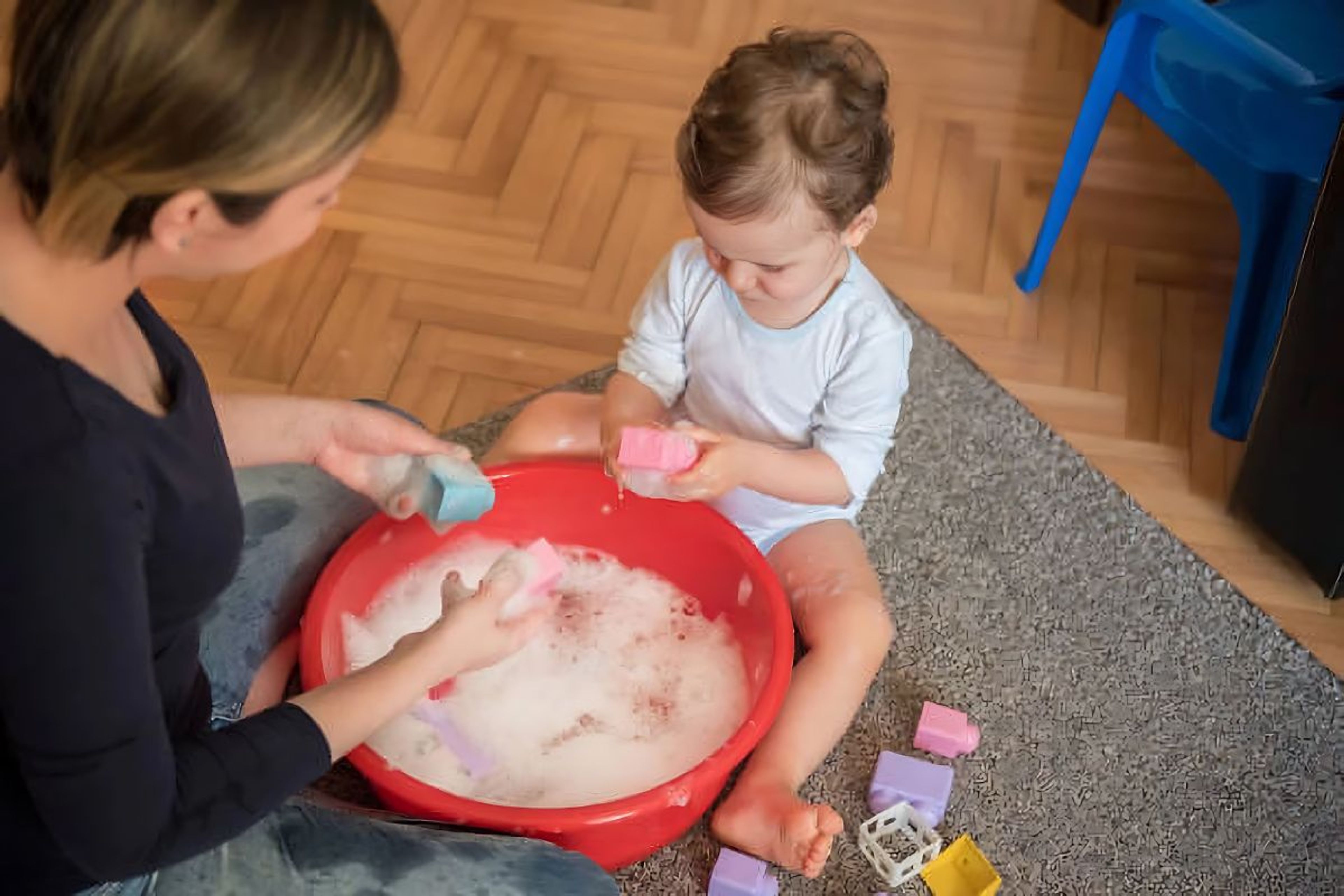
Sensory play toys can include water containers, textured materials, play dough, large safe household objects, sound-making materials, and movement activities. These experiences give children opportunities to notice differences, describe what they feel, test what floats or sinks, and decide what they want to repeat.
Sensory preference differs from developmental need. Some children seek strong movement or texture; others avoid sticky materials, loud sounds, or messy surfaces. Start with one manageable material and watch the child’s response. If the activity causes distress, stop and offer a calmer option rather than pushing the child to tolerate it.
Try a toddler setup with two stable containers and several large objects that cannot fit in the child’s mouth. Place a washable mat underneath, model moving one object from one container to the other, then let the child transfer, sort, drop, and narrate. Keep an adult within reach, check every item beforehand, and store the materials away from younger siblings after cleanup.
- Use non-slip containers on a stable surface.
- Check every ingredient and material before use, including homemade dough.
- Keep water, powders, beads, and loose parts under direct supervision.
- Wash hands and clean the play surface after the activity.
- Consult a qualified professional if sensory responses or development cause ongoing concern.
Searches for non toxic children's toys often focus on a material label, but safety also depends on the finished product, construction, intended use, and supervision. CPSC guidance should be your reference for ingestion, choking, and other product hazards. Sensory materials should never be presented as treatment for a developmental condition.
Check materials and safety before buying non toxic children's toys
“Non-toxic” is only one product claim. It does not tell you whether a toy contains small detachable pieces, breaks easily, has sharp edges, includes a long cord, uses magnets, or contains an accessible button battery. A safer product-page review considers the whole object.
The CPSC Toy Safety guidance covers age grading, hazards, recalls, and supervision. It states that toys intended for children 12 and under must be third-party tested and certified through a Children’s Product Certificate for applicable safety requirements. That certification requirement belongs to manufacturers and importers; a retailer’s “safe” description is not a substitute for checking the product information.
Before checkout, review the manufacturer’s material and care information. Read customer reviews for repeated reports of cracking, loose parts, leaking liquid, or fading after washing. Then check current official recall information rather than relying on an old marketplace listing.
- Confirm the manufacturer’s age recommendation and warnings.
- Look for small parts or pieces that could detach after chewing, dropping, or washing.
- Check whether the toy includes button batteries, high-powered magnets, cords, liquids, powders, or water beads.
- Read cleaning, storage, and maintenance instructions.
- Inspect the toy after purchase and after heavy use.
- Remove damaged toys from play until you can replace or repair them according to the manufacturer’s guidance.
Button batteries can cause serious injury if swallowed, and high-powered magnets can create serious risks when swallowed. Long cords and loose pieces also need careful handling around babies and toddlers. CPSC is the right place to check current warnings and recalls because product information can change after a toy reaches the market.
Do not assume that wood, silicone, fabric, paint, or any other material is safe in every form. A material’s risk depends on its finish, construction, size, durability, and intended use. That is why a careful inspection matters even when the product page uses reassuring language.
When not to choose a toy based on its educational label
A developmental toy guide has limits. Skip the purchase or pause the activity when any of these conditions apply:
- The child cannot use the toy without a choking, ingestion, fall, burn, battery, magnet, or entanglement risk.
- The manufacturer’s age guidance conflicts with the child’s current ability or the supervision available.
- The toy requires constant adult correction, leaving the child unable to explore independently.
- The child repeatedly shows distress, fear, or sensory overload during use.
- You hope the toy will fix a developmental concern or replace advice from a qualified professional.
Choose a simpler alternative, change the setup, or put the toy away. The best educational toys for child development fit the child and the moment; they do not create pressure to perform.
Make play more effective without turning it into a lesson
Adults shape play through the setup and the language they add. Follow the child’s lead, describe what is happening, and offer one small challenge when the child seems ready. HealthyChildren.org and NAEYC both point caregivers toward interaction and imaginative play rather than toys that keep children passively entertained.
Use prompts that open a path instead of demanding a correct answer:
- “What could make the tower steadier?”
- “Where is your animal going?”
- “You put the blue piece beside the red piece.”
- “What should happen next?”
With a toddler, place two containers on the floor and offer several large, age-safe objects. Transfer one object while saying “in,” then hand control back. The child may repeat the action, switch containers, stack the objects, or abandon the plan to start pretend cooking. Let that change happen. Play based learning loses its value when an adult corrects every move or turns free play into a quiz.
Rotate a small selection when the play space becomes crowded or repetitive, but keep familiar favorites available. A toy that seems “finished” may become interesting again after a book, a walk, or a new prop changes the child’s idea.
Follow the child’s idea first; add language or a small challenge only when it keeps the play moving.
Build a balanced toy collection on a realistic budget
A useful collection does not need several versions of every toy category. Choose a small mix that gives the child access to construction, books, pretend play, movement, art, puzzles or games, and sensory exploration. Household materials can complement purchased toys when they are clean, large enough, age-safe, and supervised.
Use this buying order:
- Safety and age fit.
- The skill the child can practice now.
- Open-ended use.
- Durability and care requirements.
- Appearance, lights, sounds, and other extra features.
Imagine choosing between a single-purpose electronic toy that plays the same sequence each time and a simple construction set. The electronic toy may attract attention quickly, while the construction set can become a tower, bridge, road, pretend meal, or counting exercise. If the construction set meets the child’s safety and ability needs, its wider range of possible play makes it the stronger choice for repeated use.
For gifts, ask what the family already owns before buying. Shared gifts, toy rotation, library borrowing, and a well-chosen book can reduce duplication. Learning toys for toddlers especially benefit from storage systems that keep a few pieces visible and prevent loose parts from spreading across every room.
| Buying question | Keep the toy if | Pause or skip if |
|---|---|---|
| Is it safe? | Warnings, construction, and supervision needs are clear | Parts detach easily or hazards remain unclear |
| Does it fit now? | The child can attempt the main action | The toy requires skills well beyond current ability |
| Can play change? | The child can build, sort, imagine, or vary the use | Only one scripted result is possible |
| Will it fit daily life? | Cleaning, storage, and supervision are manageable | The setup creates more risk or work than the family can support |
Use a final toy-buying checklist before checkout
Save this checklist for online shopping or take it with you to a store. It keeps the phrase educational toys for child development tied to a real decision rather than a marketing promise.
- Age and ability: Does the manufacturer’s guidance fit the child’s current coordination and supervision needs?
- Developmental invitation: Can you name one skill the child can practice through real actions?
- Flexible play: Does the toy allow more than one use, story, structure, or result?
- Construction: Have you checked small parts, breakage, sharp edges, cords, magnets, batteries, liquids, and powders?
- Materials: Have you read the manufacturer’s material and care information rather than relying on “non-toxic” alone?
- Supervision: Can an adult provide the level of attention the toy requires?
- Cleaning: Can the toy be cleaned and stored as directed?
- Interest: Does it connect with something the child already tries, asks about, or pretends to do?
- Storage: Is there a realistic place to keep every piece away from younger children?
Educational toys by age can help you screen choices, while observation tells you whether a particular toy fits your child today. Cottage for Tots describes its offering as specially curated toys and books for playful learning, so shoppers can apply the same checks here: age fit, safety information, play value, supervision, and practical storage.
The number of skills printed on a package matters less than what the child actually does with the toy. Choose the item that invites safe, repeatable play and leaves room for the child’s own ideas.