15 Easy STEM Activities for Preschoolers to Try at Home

Summary
Try 15 preschool STEM activities at home with blocks, paper, and water. Each activity has a question, materials, and a version with no heat or tiny parts.
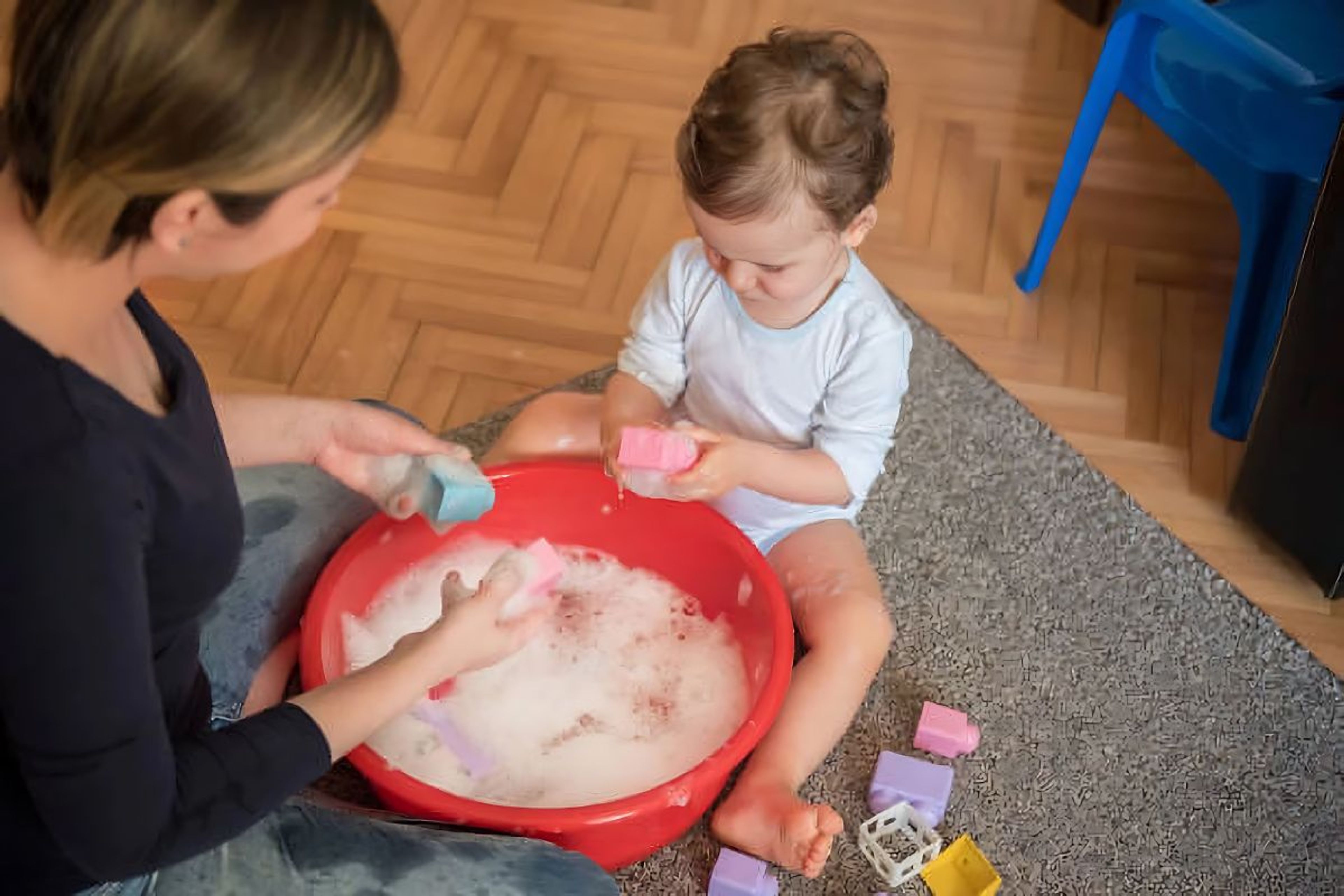
A preschooler can test one question with blocks, paper, water, or a flashlight. You do not need a kit, a volcano, or a correct answer waiting at the end. The activity is the guess, the try, and a short talk about what happened.
STEM, for about ages 3 to 5, means science, technology, engineering, and math in a form a child can do on the floor: notice, compare, build, and change one thing. Technology here is a tool, such as a ramp or a cup, not a screen. These games are practice. They do not raise a score, and they are not a way to judge how a child learns.
What preschool STEM looks like
By 4 years, most children name a few colors of items and tell what comes next in a well-known story, on the CDC 4-year milestone list. By 5 years, most count to 10, name some numbers between 1 and 5 when you point to them, and pay attention for 5 to 10 minutes during an activity such as making something. Screen time does not count toward that attention milestone. The 5-year page was reviewed on 16 May 2026. Milestones are what 75% or more of children do by that age. They are not a screening tool. The CDC explains that limit on its key points page.
A 3-year-old can still build, sort, and roll a ball. Do not ask them to count to 10. Looking at two piles and pointing to the bigger one is the math.
The What Works Clearinghouse practice guide Teaching Math to Young Children (November 2013) is written for educators of children ages 3 to 6. Recommendation 1 is to teach number and comparison along a progression. The panel rated that recommendation moderate evidence. Recommendation 2 is to teach shapes, patterns, measurement, and sorting along a progression. The panel rated that one minimal evidence, and said a minimal rating does not make the recommendation less important. The studies were classroom programs that combined several practices. A paper bridge on a Tuesday is not those programs. The useful borrow is the size of the question: one comparison, one pattern, or one build.
Hand work during the builds is covered in fine motor toys for preschoolers. One finished question, rather than a busy table, is the same idea as the toys for concentration.
Ask, predict, test, talk
NAEYC’s family note on nurturing a scientist suggests wondering out loud, asking the child to predict before a simple test, and talking about the result afterward. One of its examples is rolling balls down a ramp to see which goes farther. The same note says not to correct a wrong idea on the spot. Ask what they noticed instead.
Use the same four beats for every activity below.
- Ask one question.
- Let them guess before you start.
- Change one thing and try again.
- Ask what happened. Then stop.
If they want to knock the tower down and laugh, that is the end of the science for today. The knock-down is still play.
| Activity | Question | Materials | You stay? |
|---|---|---|---|
| Tower that stays up | What keeps it standing? | 8 to 10 large blocks | Nearby |
| Paper bridge | Can paper hold a toy? | Paper, two books, one toy | Yes |
| Sink or float | Will it stay on top? | Tray, a little water, 3 objects | Yes |
| Sort one way | Which ones match? | Two bowls, 6 to 8 large items | Nearby |
| Continue a pattern | What comes next? | Two kinds of blocks or socks | Nearby |
| Move a shadow | What changes the shadow? | Flashlight, one toy | Yes, you hold the light |
| Watch one thing outside | What is the same? | A window, paper, a crayon | Yes |
| Three-step robot | Can they follow three steps? | Clear floor | Yes |
| Roll down a ramp | Which goes farther? | A book, cardboard, a large ball, a block | Yes |
| Which cup holds more | Did the water fit? | Two cups, a tray, a little water | Yes |
| Heavy or light | Which hand drops? | Two large objects | Nearby |
| Roll or stop | Will it keep moving? | A ball and a block | Nearby |
| Two bags of ice | Which stays hard longer? | Two sealed bags, a towel | Yes |
| Which pile has more | Which group is bigger? | Blocks in two piles | Nearby |
| Same blocks, new job | What did you change? | The same blocks | Nearby |
If your child still puts things in their mouth, every piece has to be too large to fit entirely in the U.S. Consumer Product Safety Commission small-parts test. That test is a cylinder 1.25 inches across and 2.25 inches deep. An object that fits inside, in any direction, without being squeezed, is banned in products meant for children under 3. A 3-year-old who still mouths objects should follow the same size rule at home.
1. Build a tower that stays up
Question: What keeps the tower standing?
Materials: 8 to 10 large blocks, or plastic cups if you have no blocks. Build on the floor, not on the edge of a table.
Try it: Stack until it falls. Ask where it fell. Try again with a wider bottom, three blocks side by side, then one on top. Stop after the second tower, whether it stands or not.
Concept: A wide base is steadier than a skinny stack. That is engineering, in one try.
Another try: Give them only six blocks. Fewer pieces make the wide base easier to see.
2. Test a paper bridge
Question: Can a sheet of paper hold a toy between two books?
Materials: two similar books, one sheet of paper, one large toy. No scissors.
Try it: Set the books a hand’s width apart. Lay the paper flat across the gap. Set the toy on the paper. It will sag or fall. Then fold the paper in half the long way, or roll it loosely and set it across the gap again. You can do the fold if they cannot. Test the same toy.
Concept: The paper did not get heavier. The shape changed how much it could hold.
Another try: One fold, then two folds. If they chew paper, skip this one and repeat the tower.
3. Guess what sinks or floats
Question: Will it stay on top of the water?
Materials: a shallow tray, a few tablespoons of water, and three large objects. A wooden block, a plastic lid, and a metal spoon are enough. No coins, marbles, or caps.
Try it: They point to an object and say “top” or “under,” in whatever words they have. Then set it on the water. Try the other two. Empty the tray before you leave the room, including for a minute.
Stay beside any water. The American Academy of Pediatrics says on HealthyChildren.org that young children can drown in as little as an inch or two of water, and that drowning is the leading cause of death for children ages 1 to 4. Use a tray, not a bucket.
The toddler version, without the guess first, is in sensory play activities.
Concept: Some objects stay up and some do not. You do not need the word “density.”
Another try: They choose the third object from the room. If it is small enough to swallow, it does not go in the water.
4. Sort by one rule
Question: Which ones go together?
Materials: two bowls and 6 to 8 large items. Blocks of two colors, or spoons and cups, work.
Try it: Name one rule before you start. Color, or size, or “spoons here, cups there.” Do not add a second rule in the same game. They sort. If a piece is in the “wrong” bowl, ask “what is your rule?” before you move it.
Concept: Sorting is early data. One attribute at a time is the progression the math guide describes. A child who can name a few colors, which most can by 4 years, can use color as the rule. A younger child can sort by “this kind” without color words.
Another try: They make the groups, and you guess the rule.
5. Continue a pattern
Question: What comes next?
Materials: two kinds of large blocks, or two colors of socks.
Try it: Lay down red, blue, red, blue. Hand them the next piece only after they point. If they stack instead, the pattern is over. Stacking is a fine next game.
Concept: A pattern is a rule you can keep going. The CDC 4-year list includes telling what comes next in a familiar story. A block pattern is a shorter version of that “what comes next” question.
Another try: Add a third kind only after the two-kind pattern is easy. Three kinds is a new game, not a correction of the first one.
6. Move a shadow
Question: What happens to the shadow when the light moves closer?
Materials: a flashlight with the battery door closed, a wall, one toy. No candles, no lamp you take the shade off.
Try it: You hold the flashlight. Set the toy near the wall and turn the light on. Move the light closer, then farther. Ask what changed. One move is enough.
Concept: Light travels in a straight line from the flashlight. Closer light makes a larger shadow of the same toy. They do not need that sentence. “Bigger” or “smaller” is the observation.
Another try: Draw the shadow once, then put the crayon away. Drawing what you saw is the recording step NAEYC suggests. More on marks on paper is in art in early childhood.
7. Watch one thing outside
Question: What is the same, and what is different?
Materials: a window, or a short walk where you hold hands. Paper and one crayon if they want to draw it later.
Try it: Pick one pair: two trees, or a bird and a parked car, or the sky now and the sky after a snack. NAEYC’s prompt is “how are these the same, and how are they different?” Take two answers. Stop.
Do not pick berries, mushrooms, or seeds. Do not let them taste a plant to “see what happens.”
Concept: Science at this age is a careful look, not a collection of small nature pieces.
Another try: The same window tomorrow. Ask what changed.
8. Give a three-step robot
Question: Can they follow step, step, stop?
Materials: a clear patch of floor, away from stairs.
Try it: You are the robot first. They say three moves: step, step, stop. You do only those three, then freeze. Then they are the robot and you say three moves. NAEYC’s unplugged coding notes use a robot game with directions a partner can follow, without a computer. Three spoken steps are the home version.
If they say “go downstairs,” that step does not count. Pick another.
Concept: A sequence is an order. Changing the order changes where you end up. That is the technology piece, and it needs no tablet. A wider look at screens is in balancing screen time with play.
Another try: Add a turn only after three forward steps work. Left and right can wait.
9. Roll down a ramp
Question: Which one goes farther, the ball or the block?
Materials: one hardcover book, a piece of cardboard or a baking sheet, a large soft ball, and a block. No marbles.
Try it: Prop the cardboard on the book. They guess which object will travel farther. Let one go, then the other, from the same spot. Mark the stop with a sock if you want. Raise the book once and try again. If the ball heads for the stairs, the game is over. Chasing a ball around the room is a different activity, in indoor gross motor activities.
Concept: A steeper ramp sends an object farther, until it hits something. A ball rolls. A block usually slides or stops. NAEYC uses a ramp test as a home investigation and asks for a prediction first.
Another try: The same ball, two heights. Change one thing only.
10. See which cup holds more
Question: Did all the water fit in the other cup?
Materials: two cups of different sizes, a tray, enough water to fill the smaller cup about halfway.
Try it: Fill the smaller cup on the tray. They guess whether it will fit in the bigger cup. Pour. Then try the other direction with the same water. Empty both cups when you stop.
By 4 years, most children pour water with an adult watching, on the CDC movement list. The pour is the activity. A dry shirt is not the goal.
Concept: Direct comparison is measurement before rulers. “More fits here” is the finding.
Another try: A third cup is harder. Two cups are enough.
11. Compare heavy and light
Question: Which hand drops?
Materials: two large objects, such as a book and a stuffed animal. Nothing small enough to mouth.
Try it: One object in each hand. Ask which arm goes down. Trade hands and try once more, in case the first answer was the stronger arm.
Concept: Weight is a comparison you can feel. You do not need a scale or a number.
Another try: They find something in the room heavier than the book. Check the size before they carry it. One pillow is plenty. A stack of cushions to climb is not this game.
12. See what rolls and what stops
Question: Will it keep moving, or stop?
Materials: the same large ball and the same block, on a clear floor. This one is flat. The ramp was activity 9.
Try it: They predict, then give the ball a gentle push. Then the block. Ask which one kept going.
Concept: A round shape rolls. A flat face stops. The push has to be similar or the test is really about your arm.
Another try: A third object they choose, if it is large and will not mark the floor.
13. Compare two bags of ice
Question: Which ice stays hard longer?
Materials: two small sealed bags, each with one or two ice cubes, and a dry towel. Tape the seals if the zip can open. No loose ice. No microwave, no warm water from the stove.
Try it: Wrap one bag in the towel. Leave the other on a plate. Wait a few minutes. Feel the bags, or look through them. Open them later in the sink, not at the table.
Concept: A cover slows melting. The ice is the same. The towel is the one change. Ice that is out of the bag is a choking hazard, so the bag stays closed while they play.
Another try: Skip the wait if they only want to hold a cold bag. Holding it is still an observation.
14. Say which pile has more
Question: Which group has more?
Materials: blocks in two piles, such as 2 and 4. Keep the piles small enough to see at a glance.
Try it: Ask which has more before anyone counts. Then count together if they want to, touching one block at a time. By 5 years, most children count to 10. A 3-year-old who says “that one” and points at the bigger pile has done the comparison. Do not turn a point into a lesson.
Concept: Comparing groups comes before adding. The math guide treats that order as the progression for number.
Another try: Make the piles equal and ask if they are the same.
15. Use the same blocks for a new job
Question: What did you change?
Materials: the blocks from the tower.
Try it: Build a road, flat on the floor. Then use those same blocks to build a wall. Ask what changed: the blocks, or the job. One sentence from them is enough. CDC’s tip for 5-year-olds is to ask why a bridge was put in a certain spot, during ordinary block play. “Why there?” is a better question than “what shape is that?”
Concept: The same materials can solve two problems. Planning the second build is the engineering.
Another try: They name the next job, and you build it their way.
Questions that leave the answer with them
Pick one question. Asking all of them turns the game into a quiz.
- What do you think will happen?
- What did you notice?
- What could we change next?
NAEYC’s example of a wrong idea is a child who says only birds can fly. The follow-up is “what does a bird have that helps it fly?” and then “what else has wings?” You do not need a speech about airplanes. One question is the correction.
Save a longer sit for a child who is still interested. The 5-year attention milestone is 5 to 10 minutes during making or a story, and screen time does not count. Ending while they are still willing is better than stretching past it. How to keep one job on the table is in toys that help concentration.
What to skip
Do not mix a cleaner and a powder to make a volcano. The show hides the question, and the container is something a child may taste. There is no recipe for that on this page because it is the activity to leave out.
Do not hand over loose magnet balls or magnet cubes. The CPSC magnet page says high-powered magnets are a risk from toddler age through the teen years. If two or more are swallowed, they can attract through stomach or intestinal tissue. A test of “what sticks to the fridge” can wait. The fridge magnets stay on the fridge.
Do not use balloons. The warning on latex balloons says children under 8 can choke or suffocate on balloons that are uninflated or broken.
Do not use a candle, a stove, or hot water. The shadow activity uses a flashlight you hold, with the battery door closed. A coin-shaped battery that comes out is not a play piece. Pick it up immediately.
Do not use rice, beans, beads, or buttons as counters. Blocks and socks count just as well.
Do not leave water in a tray or a bucket. Empty it before you step away.
If you only have ten minutes
Use activities 1, 4, 5, 11, and 14. None of them need water, ice, or a darkened room. One question, then put the blocks away.
A set of blocks that can be a tower, a road, and a counting pile is the construction toy this list keeps returning to. How to choose that kind of open-ended toy is in the guide to choosing educational toys. The shop is the CottageForTots Shopee store. Check the size of any ball before you buy.
Frequently asked questions
What are STEM activities for preschoolers?
They are short tests of one question: what keeps a tower up, what sinks, what comes next in a pattern, which cup holds more. Science, technology, engineering, and math are the labels adults use. The child is guessing and trying.
Can I do preschool STEM at home without a kit?
Yes. Blocks, paper, two cups, a flashlight, and a large ball cover this list. A kit is optional, and a kit with small parts is the wrong optional.
How long should a preschool STEM activity last?
A few minutes is a full session. The CDC figure of 5 to 10 minutes of attention is for most 5-year-olds during making or a story. Stop earlier if they leave, if the water is unattended, or if the guess has turned into a quiz.
What if my child guesses wrong?
Keep the result. Ask what they noticed. A wrong guess that they get to check is the activity. Correcting them before the test removes the reason to try.
Is a baking-soda volcano a good first science activity?
No. It is loud, it uses materials that do not belong in a mouth, and the child cannot see which change mattered. A paper bridge or a ramp shows one change with things you can throw away or put back on the shelf.
Can a 2-year-old do these?
The tower, the sort, and a large ball on the floor can shrink to their size. Predicting in words fits better from about 3. Water, pouring, and sensory tests for children who still mouth objects are in sensory play for toddlers.
What to try first
Put eight blocks on the floor and ask what keeps a tower standing. Build one skinny stack and one with a wide bottom. If they only want to knock it down, knock it down together and try the pattern tomorrow.
For the age picture of counting, colors, and attention, start with the CDC lists linked above. For the toy that can do this job every week, start with the educational toys guide.