15 Easy Sensory Play Activities for Toddlers at Home

Summary
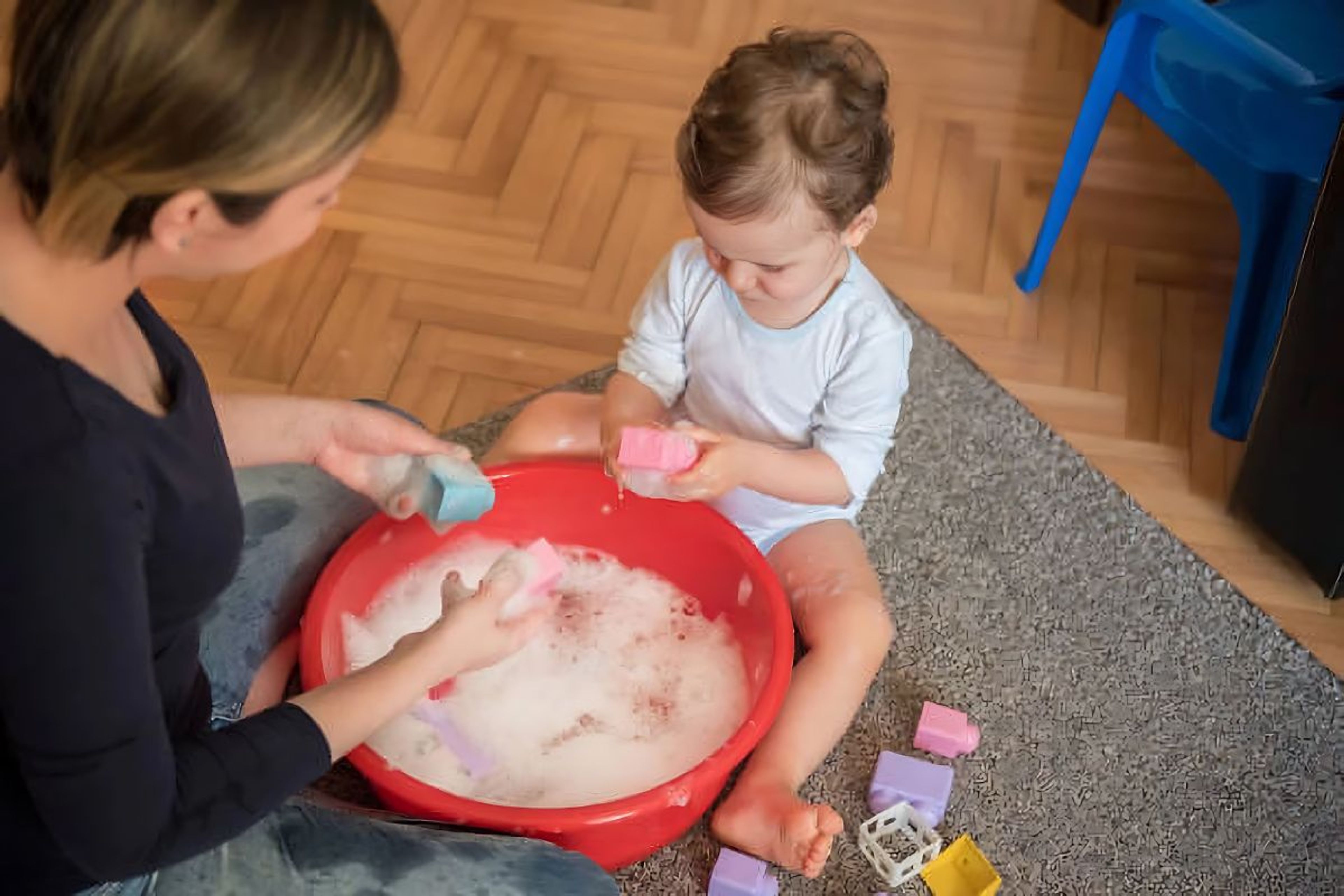
Try 15 sensory play activities for toddlers at home with water, cloth, and dough. Setup, mess level, and choking notes for children who still mouth objects.
A toddler can explore water, cloth, sound, and dough with things you already own. The useful version is one material, a few minutes, and you within reach. A bin of rice, beads, or water beads is the version to skip.
Sensory play means the child learns by looking, touching, hearing, smelling, tasting, or moving. NAEYC describes toddlers as ready for this kind of exploring, including water, sand, and art, even when the result is a mess rather than a picture. ZERO TO THREE uses the same idea outdoors: grass, birds, puddles, and whatever the child stops to notice. You do not need a lesson plan.
These activities are for about 12 to 36 months. They are play, not therapy for sensory processing differences. If a material upsets your child, stop. If sensory reactions worry you most days, talk with your child’s doctor.
Set up one material
Clear a spot that can get wet or dusty. A towel on the floor is enough. Put out only the pieces for one activity.
Stay for anything with water. The American Academy of Pediatrics says on HealthyChildren.org that young children can drown in as little as an inch or two of water, and that filled buckets and similar containers should be emptied after use. Use cups and a shallow tray, not a bucket. Empty them before you leave the room, including for a minute.
For loose objects, use the U.S. Consumer Product Safety Commission rule for children under 3. A small part is anything that fits, without squeezing and in any orientation, entirely inside the small-parts cylinder (1.25 inches across and 2.25 inches deep). If a piece would fit, do not hand it to a toddler who mouths objects.
Name one property if they look at you: wet, loud, cold, rough. Then let them repeat. Correcting the “right” way to touch usually ends the play.
Fifteen activities at a glance
| Activity | Materials | Setup | Mess | Stay beside them? |
|---|---|---|---|---|
| Pour water | Two cups, tray, sponge | 2 minutes | Wet | Yes |
| Sink or float | Tub or tray, 3 large toys | 2 minutes | Wet | Yes |
| Wet and dry cloth | Two washcloths | 1 minute | Damp | Nearby |
| Squeeze a sponge | Sponge, cup, tray | 2 minutes | Wet | Yes |
| Ice in a bag | Ice, sealed bag | 2 minutes | Low | Yes |
| Fabric basket | 4 large fabric scraps | 1 minute | None | If they mouth cloth |
| Store-bought dough | Commercial play dough | 1 minute | Sticky | Yes |
| One-color paint | Yogurt or washable paint | 3 minutes | Messy | Yes |
| Pot drum | Pot, wooden spoon | 1 minute | Noise | Nearby |
| Sound walk | Shoes, a path outside | 0 at home | None | Yes, outdoors |
| Feet on textures | Grass, towel, or mat | 1 minute | Low | Yes |
| Bubbles | Bubble bottle | 1 minute | Sticky | Yes |
| Two smells | Two foods they already eat | 2 minutes | Low | Yes |
| Large nature pieces | Leaves or a pinecone | 5 minutes | Low | Yes |
| Sealed water bottle | Bottle, water, one large toy | 5 minutes | Low if sealed | Check the lid |
1. Pour a little water
Materials: two open cups, a tray, a sponge, a few tablespoons of water.
Try it: Pour once from one cup to the other. Hand them the cup. Wipe one drip so they see the ending.
What you might see: A spill, then another pour. Repetition is the activity.
Easier: They pour onto a sponge in a bowl. The longer version, with a full work cycle, is in Montessori-inspired activities for 2-year-olds.
2. See what sinks or floats
Materials: a shallow tray or the bath, with you holding them or sitting in reach, plus three large toys. A wooden block, a plastic cup, and a bath duck are enough.
Try it: Set one toy on the water. Say “on top” or “under” only if they notice. Offer the next toy.
What you might see: Everything gets pushed under. NAEYC’s sand and water notes treat that testing as early physics, not a failed experiment. A version that starts with a guess, for about ages 3 to 5, is in preschool STEM activities.
Skip: Coins, marbles, and anything that fits in the small-parts cylinder.
3. Compare a wet cloth and a dry cloth
Materials: two washcloths, one damp.
Try it: Lay them side by side. Touch the damp one, then the dry one. Let them squeeze, pat, or wear the dry one as a hat.
What you might see: They may care more about the hat than the lesson. That still used touch.
Easier: Only the dry cloth, if wet fabric bothers them.
4. Squeeze a sponge
Materials: a clean sponge, a cup with a little water, a tray.
Try it: Dip the sponge, lift it, and squeeze it over the cup. Offer the sponge.
What you might see: Water everywhere except the cup. Move the cup under their hands once, then leave it.
Why it is here: Squeezing is a hand skill as well as a wet one. How hand skills fit with whole-body skills is in gross and fine motor skills.
5. Touch ice through a bag
Materials: a few ice cubes inside a sturdy zip bag, closed, with tape over the seal.
Try it: Set the bag on a towel. Let them poke it. Leave it while it melts.
What you might see: Surprise at the cold, then pushing the bag along the floor.
Do not: Hand over loose ice cubes. A broken piece is easy to choke on. If the bag opens, take it away.
6. Sort large fabric scraps
Materials: four big scraps, such as a towel corner, a smooth cotton shirt piece, a wool sock, and a silky scarf tied so it cannot wrap the neck. No loose strings.
Try it: Put them in a basket. Rub one on your arm, then offer the basket.
What you might see: Everything dumped, then one fabric carried around all day. One texture they like is a successful session.
Skip: Ribbons, beads sewn on the cloth, and anything that unravels into small threads.
7. Use store-bought play dough, not raw flour
Materials: a small lump of commercial play dough on a tray, and a cup or a safe plastic knife with a rounded tip if you want a tool.
Try it: Flatten it with your palm. Poke one hole. Hand it over.
What you might see: Squeezing, tasting, or walking away from the sticky feeling. If they hate it, offer a dry fabric scrap instead. Do not insist they tolerate it.
Do not make homemade dough from raw flour. The CDC says most flour is raw and can contain germs such as E. coli and Salmonella. Those germs are killed by cooking. The CDC also says not to let children play with or eat dough made with raw flour, including craft dough. The FDA says not to heat-treat flour at home. Commercial play dough is a toy, not a food. If your child eats whatever they touch, skip dough until mouthing settles. Wash hands either way.
8. Paint with one color
Materials: a spoon of plain pasteurized yogurt, or a pea-sized amount of washable finger paint, on paper taped to the table. Use yogurt only if your child already eats that yogurt and has no allergy to it.
Try it: Make one dot. Let them spread it. Stop while the paper still has empty space, or they will keep going until the table is the artwork.
What you might see: Paint on the arm. NAEYC’s toddler sensory piece treats that as exploring, which is the point, as long as the paint is washable and you can clean it off.
Skip: Paint cups they can drink, glitter, and any “taste-safe” recipe that uses raw flour.
9. Drum on a pot
Materials: a pot and a wooden spoon.
Try it: One tap, then silence, then their turn. Loud and quiet is the whole game.
What you might see: Continuous banging. That is still hearing and cause and effect. End it when the noise is too much for the house, not because they failed to keep a beat.
More on sound toys is in music toys and musical milestones.
10. Take a short sound walk
Materials: a path you already walk. No worksheet.
Try it: ZERO TO THREE suggests listening for birds, crunching leaves, or a stick on a rough surface, then pausing. Stop when your child stops.
What you might see: They ignore the bird and study a drain. Follow that.
Easier: Open a window and listen for one sound before you go out.
11. Feel the ground with their feet
Materials: grass, sand, or a towel on the floor. Check the ground for sharp bits first.
Try it: Shoes off, you standing there. Say “prickly” or “soft” once.
What you might see: They sit down and eat sand, or refuse to step off the pavement. Sand in the mouth means the sand play is over for today. A towel indoors is the backup.
12. Chase bubbles
Materials: a bubble solution you blow, outdoors or over a wipeable floor.
Try it: Blow a few. Let them pop bubbles on a hand or a knee. Action for Children uses bubbles as a simple sensory activity from babyhood into the toddler years: babies feel them, toddlers chase them.
What you might see: Running, which is the gross-motor half of the activity. More big-body games for a small room are in indoor gross motor activities.
Do not: Let them drink the solution or blow into a bottle of it. Put the bottle up when you stop.
13. Smell two foods they already eat
Materials: two familiar foods, such as a piece of orange and a piece of banana, on separate plates.
Try it: Smell one, then the other. They can eat them if that food is already allowed.
What you might see: Both get eaten before anyone smells them. That is still taste, which is a sense.
Do not: Use powdered spices, essential oils, or small hard candies. Cinnamon powder and similar dusts are easy to inhale. Oils are easy to get in eyes and mouths.
14. Collect large pieces from outside
Materials: a few leaves, one pinecone, or one smooth stone that is too big to fit in the small-parts cylinder.
Try it: ZERO TO THREE suggests talking about color, shape, and texture, and watching for choking hazards. Put the pieces on a tray. They can sort, crush a dry leaf, or pretend the leaf is food.
What you might see: The pinecone becomes a car. Pretend play can start from a sensory tray. That overlap is normal.
Skip: Acorns, berries, seeds, and mushrooms. You do not need a nature ID app to know those do not belong in a toddler’s hands.
15. Make one sealed bottle
Materials: a clear plastic bottle with a lid you can tape shut, water, and one plastic toy small enough to go in and too large to come back out of a toddler’s mouth. No glitter, sequins, beads, or water beads.
Try it: Fill it partway, add the toy, close it, and tape the lid. Roll it on the floor.
What you might see: They shake it once and leave it. That is enough. A leaking or cracked bottle goes in the trash.
Why this list stops here: Water beads are a separate hazard. The CPSC safety alert says the way to deal with them around children 3 and younger is to remove them. Dry beads are easy to lose, look like candy, and can keep growing if swallowed. They do not belong in a sensory bottle or a bin.
If your child hates mess, noise, or sticky hands
Start with activities 3, 6, 9, and 10. Cloth, a pot, and a walk do not cover their hands in dough.
Offer a towel before they ask, so they know the mess can end. Some children want to watch you touch the material first. Some want to stop after one poke. Both count.
Pushing a child to “get used to it” is not the goal. The educational-toys guide covers the same point: one material, then a calmer option if they are distressed. That section is in choosing educational toys.
Quiet, repeated play, such as pouring the same cup of water, can also be focus practice. Toys chosen mainly for attention are in toys for concentration.
What not to put in the bin
Skip dry rice, beans, pasta, beads, buttons, and water beads for toddlers. The same rule is in the Montessori activities page: large objects, or no loose pieces at all.
Skip raw-flour dough, as the CDC describes above.
Skip a bucket of water, even if you plan to “only step away for a second.” Empty trays and bottles that leak. If a wooden toy gets wet, wipe it and dry it. Soaking wood is covered in how to clean wooden toys.
Age labels and infant toy checks, which still matter when a younger baby is in the room, are in safe toys for infants.
Frequently asked questions
What is sensory play for toddlers?
It is play that uses the senses on purpose: touch, sight, hearing, smell, taste, or movement. Pouring water, drumming a pot, and walking outside all qualify. A toy is not sensory because the package says so. It is sensory when the child can notice a difference, such as wet and dry, loud and quiet, or rough and smooth.
Are sensory play and messy play the same?
Messy play is one kind of sensory play. Paint and dough are messy. A sound walk and a dry washcloth are sensory play with almost no cleanup. If mess ends the activity in your house, use the low-mess rows in the table.
Can I use a rice bin if I supervise?
Supervision does not change the size of a grain of rice. Toddlers put things in their mouths, noses, and ears faster than a glance away. Use large fabric, a sponge, or a sealed bottle instead.
How long should sensory play last?
As long as they are interested and you can see the water. Many tries last a few minutes. End it when they leave, when you have to leave, or when the material goes somewhere unsafe. You do not need a timer.
Is this a sensory-processing treatment?
No. These are ordinary home activities. They do not diagnose or treat sensory processing differences, autism, or attention conditions. If daily life is hard because of sound, touch, or movement, ask your child’s doctor.
What to try first
Pick the row with the mess level you can live with today. Activity 3 (two cloths) or activity 1 (a splash of water) is enough for the first session.
Put that material away when you are done, so the next time is a choice rather than a pile. If you want a wooden spoon, a cup, or a simple bath toy later, the shop is the CottageForTots Shopee store. Check the piece size before you buy.