Educational Toys for 5-Year-Olds: What Supports Learning

Summary
Choose educational toys for 5-year-olds by kindergarten skills: letters, counting, rules, building, writing, and hopping. See how this year differs from age 4.
Choose educational toys for 5 year olds by the skill they are already practicing, not by the word “educational” on the box. One picture book, a short rules game, a set of blocks, a thick pencil, and space to hop cover more of this year than a pile of new toys. A toy can invite practice. It cannot guarantee a milestone, a reading level, or a kindergarten outcome.
This page is the age-5 shelf, including children in kindergarten. The year before, with a rhyme from a song, catching a large ball, and a role they stay in, is in educational toys for 4-year-olds. The wider buying test, from babies through school age, is in the guide to choosing educational toys. Each skill below is short on purpose. Sound games, the 1-to-10 path, home science questions, and the hand-toy list live in the posts linked there. The Montessori stage that still includes this year, ages 3 to 6, is in Montessori toys.
What most 5-year-olds are practicing
The CDC Learn the Signs. Act Early. checklists describe what most children, 75% or more, do by a given age. They are not a shopping list, a kindergarten test, or a screening tool. The CDC says that on its key points page. The same checklists, from babies through age 5, are summarized in early childhood development.
By 5 years, most children follow rules or take turns when playing games with other children. Most sing, dance, or act for you. Most do a simple chore, such as matching socks or clearing the table. Most tell a story they heard or made up with at least two events, answer a simple question about a book or story, keep a conversation going with more than three back-and-forth exchanges, and use or recognize a simple rhyme, such as bat and cat. Most count to 10, name some numbers between 1 and 5 when you point to them, and use time words such as yesterday, tomorrow, morning, or night. Most pay attention for 5 to 10 minutes during a story or while making something. Screen time does not count toward that attention line. Most write some letters in their name, name some letters when you point to them, button some buttons, and hop on one foot. Those lines are on the CDC 5-year checklist, reviewed 16 May 2026.
A child who is 5 and not yet hopping, or not yet naming letters, is not behind a shopping deadline. Match the toy to the child in front of you.
| Skill | What you watch them do | Look for | Leave behind |
|---|---|---|---|
| Letters and stories | A rhyme, a few letter names, a story with two events | A picture book you read together | A toy that says every line, loose magnets |
| Numbers | A count to 10, a number they name when you point | A 1-to-10 path, a small set of blocks | A worksheet toy, a toy that announces the answer |
| Rules and turns | A rule, a wait, a short game with a friend | A two-player game with one rule | A long rulebook, a game that removes a player at once |
| Building | A bridge, a puzzle they can finish | Blocks for one structure, a puzzle of about 12 to 20 pieces | A 100-piece kit, a chemistry set |
| Writing and hands | Some letters in their name, some buttons | A thick pencil or short crayon, paper, a large button | A grip drill, tiny pieces if a younger child mouths toys |
| Big movement | A hop on one foot | A clear floor, a soft ball, a taped line | Toys that shoot, a ride-on in the street |
| Play with friends | A turn, a role such as the teacher | A hat, blocks you build together | A scripted set with dozens of pieces |
NAEYC’s notes on toys for 3- to 6-year-olds group preschoolers and kindergarteners together. Children in that band talk a lot, ask questions, like to experiment, can take turns, and often do not like to lose. Sharing one toy is often possible for older preschoolers and kindergarteners. That list is wider than this birthday. The table above uses the 5-year milestones to narrow it.
How this differs from age 4
At 4, most children catch a large ball, draw a person with three or more body parts, hold a crayon between fingers and thumb, say sentences of four or more words, and tell what comes next in a well-known story. Those lines are on the CDC 4-year checklist. The useful toy is often a book, a short count, a ball, and a role.
At 5, the new lines are a count to 10, naming some written numbers and some letters, writing some letters in their name, a simple rhyme, a story with at least two events, a game with a rule, a hop on one foot, and buttoning. Attention of 5 to 10 minutes, during a story or while making something, is on the 5-year list. Screen time still does not count.
If the child is still catching, scribbling a person, and staying in a short role, use the age-4 page. This page starts when those earlier skills are already in play and the new ones are showing up.
What to look for at this age
Look for a toy the child has to say, count, follow, build, or write with. The American Academy of Pediatrics, on HealthyChildren.org, says the most educational toy is one that fosters interaction between a caregiver and a child. The same organization’s toy-buying notes say to be cautious when a label says “educational,” and that digital toys should not replace face-to-face play.
One rule you can say in a sentence is enough. A game that ends while they still want a turn beats a long setup. NAEYC notes that losing is still hard at this age. Prefer a short game, or a shared build, over a contest that lasts half an hour.
The CDC 5-year tips say to help a child get ready for new places and new people, including kindergarten, by reading stories and by role play. A hat and a book do that job. A boxed “kindergarten kit” is not required.
Read the age label, then look at this child and at anyone younger on the same floor. The CPSC small-parts ban (16 CFR part 1501) covers products intended for children under 3. A toy for a 5-year-old can include smaller pieces. Toys that are or contain a small part, a latex balloon, a small ball, or a marble must carry a choking-hazard warning for the ages named in 16 CFR 1500.19. The label is a warning. It does not mean this child is done mouthing toys, and it does not make the piece safe for a toddler sibling. If anyone on the floor still mouths toys, use the safe toys checklist for toddlers.
Early literacy
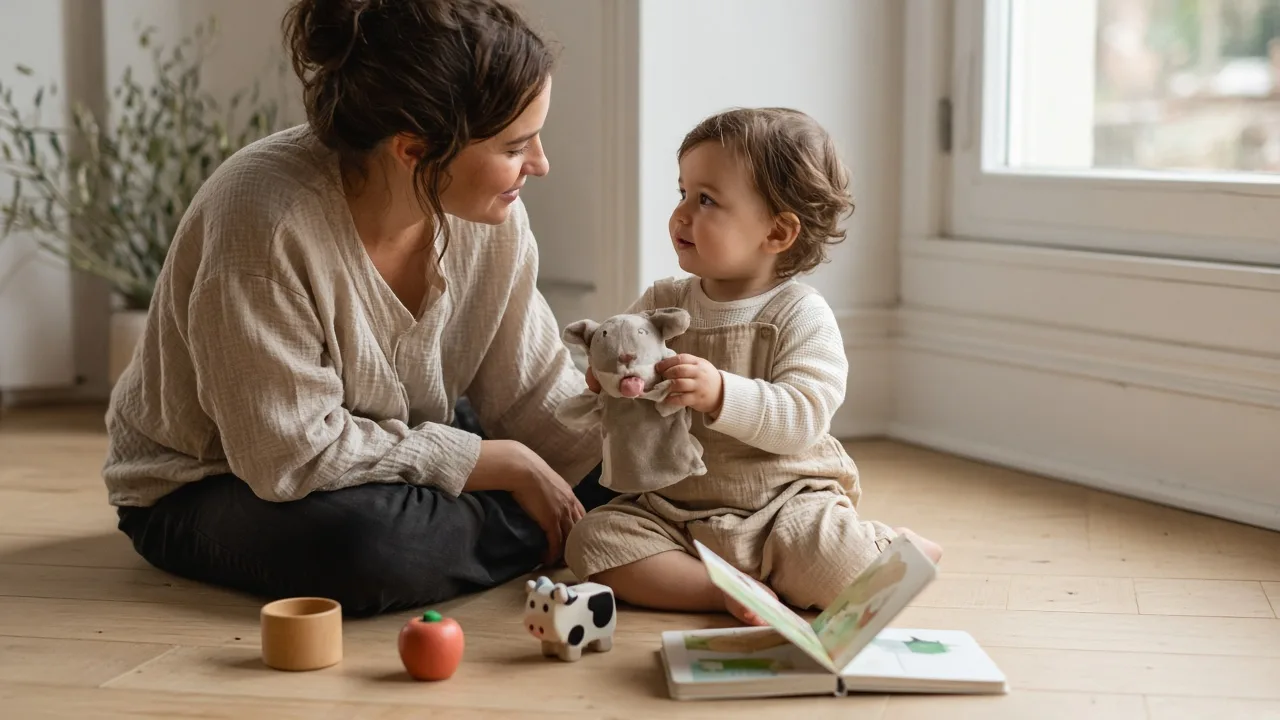
The language toy at 5 is still a book you read. The new pieces are a rhyme they can hear, a few letter names, and a retelling with two events. The CDC 5-year tips say to play rhyming games, such as “What rhymes with cat?”, to ask what is happening in the picture and what might happen next, and to let the child “read” by looking at the pictures and telling the story.
“Some letters” is the milestone. Knowing all 26 on demand is a later school skill. The short sound games, and the research notes behind them, are in reading readiness activities for preschoolers. How to read the book is in reading aloud. This page does not repeat those games.
Look for: one picture book with a rhyme or a repeated line, and one reason to say a letter you point to, such as the first letter of their name.
Skip: a toy that speaks the whole story, flashcard drills, and loose magnetic letters. The CPSC magnet page says high-powered magnets are a risk from toddler age through the teen years.
Early numeracy
At 4, counting a few real objects is the step. At 5, most children count to 10 and name some numbers between 1 and 5 when you point to them. The CDC tips also say to use time words, such as today, tomorrow, and yesterday, in ordinary talk.
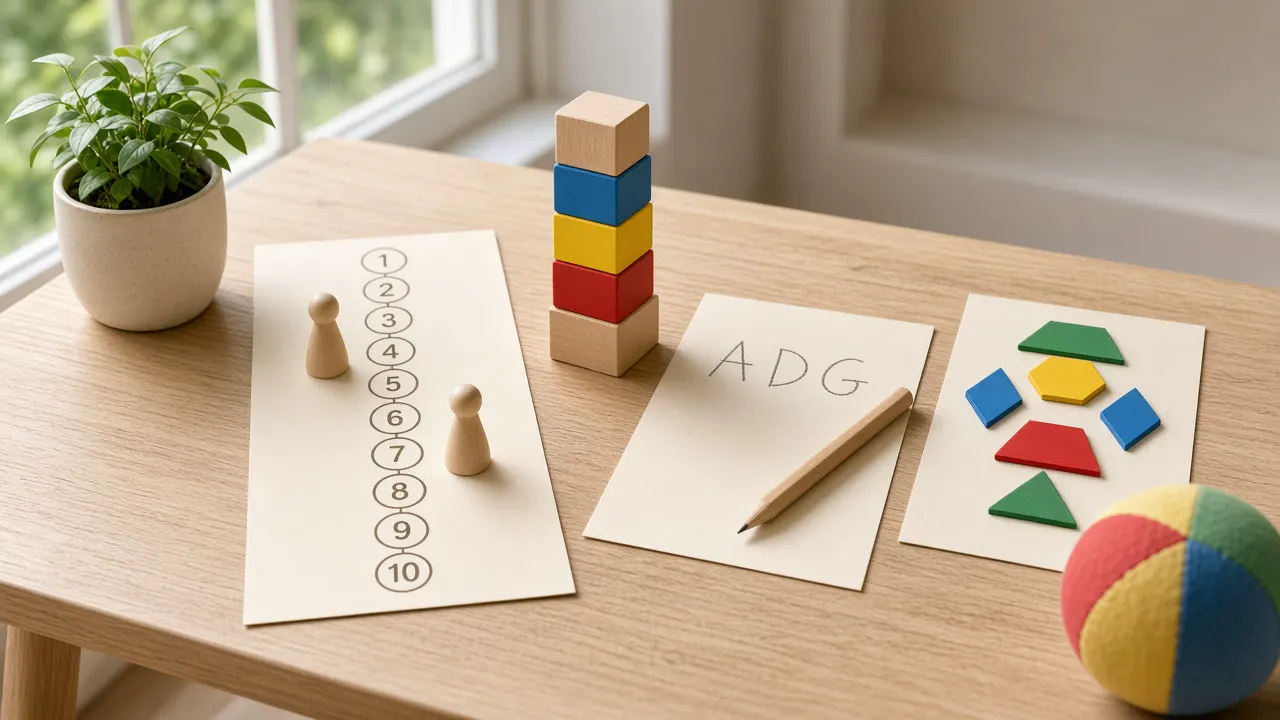
The clearest counting toy is a path of squares numbered 1 to 10, where the child says each number as they move. How to choose that game is in educational board games for ages 4 to 6. Home questions with blocks, paper, and water, including “why did you put the bridge there?”, are in preschool STEM activities.
Look for: a 1-to-10 path, or a modest set of blocks you can count. Two players is enough.
Skip: a talking math toy that announces the answer, and a kit of 100 tiny pieces. If a younger child is on the floor, the pieces still follow the under-3 size rule.
Rule-based games and turn-taking
Most 5-year-olds follow rules or take turns when they play a game with other children. The CDC tips say to teach that with a simple board game, a card game, or Simon Says, and to play memory games such as a short card match, tic-tac-toe, or I Spy. Simon Says needs no toy. A card game does, and the cards should stay large enough for any younger child in the room.
Ordinary attention on the 5-year list is 5 to 10 minutes during a story or while making something. A table of four means a long wait. Two players, one rule, and a finish while they still want a turn is the fit. What to look for in the game itself is the board-game post. A shared goal, where nobody has to lose, is in cooperative play toys. Holding one job on the table is in toys that help concentration.
Look for: a two-player game you can explain in one sentence, or a few large cards.
Skip: a rulebook you have to keep reading, and any game that removes a player in the first minute. NAEYC says children this age often do not like to lose.
Construction
Most of the building at 5 is a plan, then a change. The CDC tips say to play with puzzles and blocks that the child puts together, and to ask why a bridge goes in a certain spot. NAEYC’s 3- to 6-year-old list includes many blocks for complex structures, construction sets, and puzzles of about 12 to 20 pieces and up.
A handful of blocks can be a road, then a wall, then a house for pretend. Pattern blocks can be a design they copy and then change. Those questions are written out in preschool STEM activities. The hand work of pressing, turning, and fitting is in fine motor toys for preschoolers.
Look for: enough blocks for one structure, a small set of pattern blocks, and a puzzle the child can finish. Pieces stay large if anyone younger mouths toys.
Skip: hobby kits and chemistry sets. HealthyChildren.org’s safe-toy tips say to avoid them for any child younger than 12, because they can cause fires or contain dangerous chemicals. Skip loose high-powered magnets, sold as a building toy or not.
Early writing and fine motor
By 5, most children write some letters in their name and button some buttons. “Some” is the word on the CDC list. A full name, on a line, is not the milestone. What earlier marks mean, and what not to demand, is in what scribbles mean. The CDC tips say to keep crayons, paper, paint, child scissors, and glue for creative play, and to let the child button a shirt even when the result is imperfect.
Scissors stay a supervised tool. The toy types for threading, pegs, and puzzles are already in fine motor toys for preschoolers. How a hop compares with a button is in gross versus fine motor skills.
Look for: a thick pencil or a short crayon, a large sheet of paper, and one large button on a board or on clothing they already wear.
Skip: a pencil-grip trainer used as a drill, a worksheet pack, and beads small enough to inhale if anyone in the room still mouths toys.
Gross motor
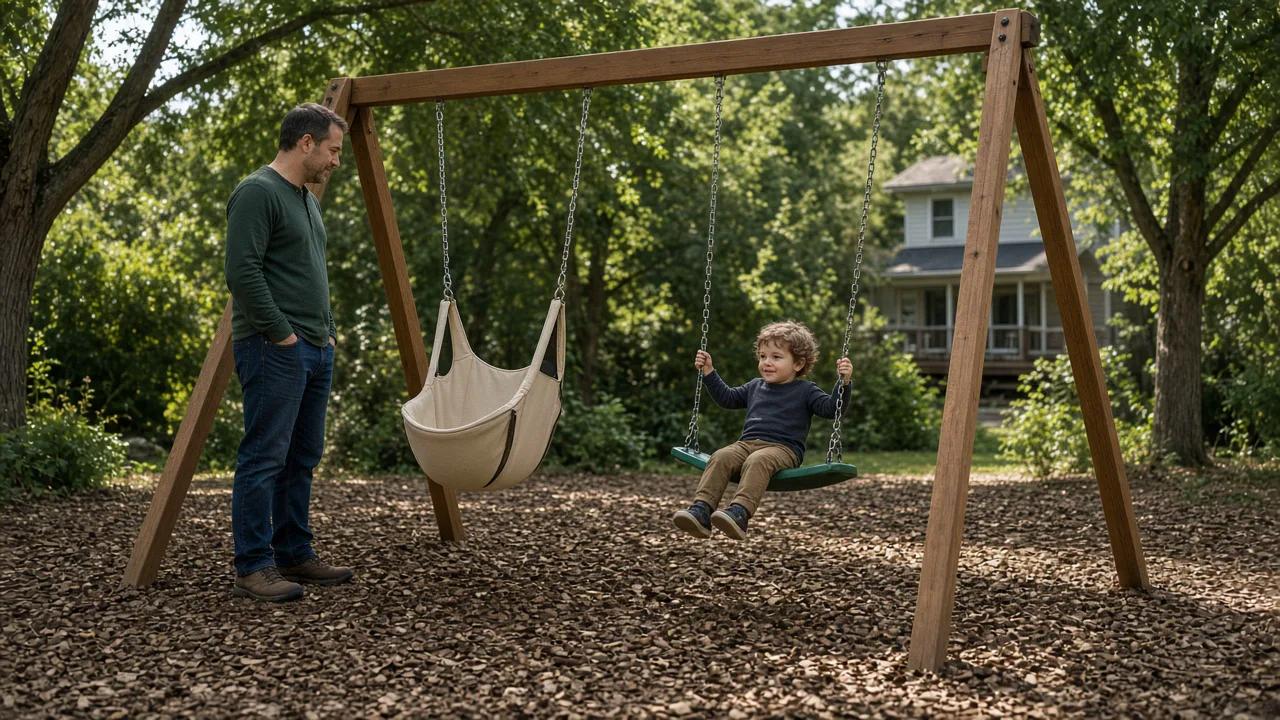
By 5, most children hop on one foot. That is the movement milestone for this year. The CDC does not list skipping on the 5-year checklist. A hop, a taped line to walk, and a soft ball are enough practice. The CDC tips say to make time for active play each day and to let the child choose: music and dancing, playing outside, or a walk. They also suggest a playground, including pumping a swing and trying monkey bars, with you there.
The World Health Organization’s 2020 guidelines for children and adolescents aged 5 to 17 recommend an average of 60 minutes per day of moderate- to vigorous-intensity, mostly aerobic, physical activity across the week. Vigorous activity, and activity that strengthens muscle and bone, should be included on at least 3 days a week. That recommendation is in the WHO guidelines. Hopping, a walk, and playground play can be part of that time. One ball does not have to fill it.
NAEYC includes balls for throwing and catching, ride-ons, and climbers with a soft surface underneath in the 3- to 6-year-old list. A ride-on has its own fit and street rules, in children’s riding toys. It is not the first movement toy on this page.
Look for: a clear floor for a hop, a soft ball larger than the child’s mouth, and a taped line or a low stable path you stay beside.
Skip: toys that shoot objects. HealthyChildren.org’s safe-toy tips say they can injure eyes or cause choking. Balloons stay out. The required latex-balloon warning in 16 CFR 1500.19 says children under 8 can choke or suffocate on uninflated or broken balloons.
Cooperative and pretend play
Most 5-year-olds will act for you, and most will follow a rule with other children. The CDC tips say to let them play with other children at a park or a library, to offer dress-up for school or house, and to use role play before a new place, including kindergarten. They also say to name feelings, including the feelings of a character in a book.
A hat, a doll, and a few blocks still work. The household setups are in pretend play ideas. Naming the feeling is in social-emotional toys. At 5, the new piece is the shared rule, not a bigger pretend set.
Look for: one hat or scarf, one doll or soft animal, and blocks two children can use for one building. HealthyChildren.org says to remove loose ribbons or strings from stuffed toys, and to check that parts and seams stay on.
Skip: a 40-piece pretend set, and a toy that plays the whole scene so the child only watches.
Choosing a gift
A holiday gift can be one of the types below, matched to a skill you have already seen. Wrap that one. Keep extra gifts out of the room and bring one out when the first has been used. How to store the rest and swap later is in how to set up a toy rotation. The published count in that article comes from a study of toddlers, ages 18 to 30 months. It is not a number of toys for a 5-year-old. There is no researched correct number for this age.
A book you already own can be the gift. Blocks you already own can be the building gift. Buy when that type is missing, broken, or too small for the children who share the floor.
Safety
Safety at 5 is the label, the child, and any younger child nearby.
HealthyChildren.org’s safe-toy tips, updated 9 November 2026, say to read the warning label, show the child how the toy is used, choose sturdy plastic rather than thin plastic that cracks into sharp pieces, and look for a “nontoxic” label. The same page says to think large: parts larger than the child’s mouth. Stuffed toys should be well made and washable, without loose strings or bean-like pellets. Electric toys should be UL approved. Be careful with button batteries or lithium coin batteries and high-powered magnets, because a loose one can be swallowed or placed in a nose or ear. Recalled toys should be removed. The CPSC lists recalls at cpsc.gov.
Age grades tell you whether the maker intended the toy for this age, including choking hazards. They do not replace supervision. Water beads stay out of a room shared with a child 3 or younger. The CPSC water-bead alert says to remove them from places with children that age. The full under-3 checklist is the toddler safe-toy page.
How to play together
Put the toy between you and play once. The CDC 5-year tips are specific: ask why the bridge goes there, count and use a time word in ordinary talk, read and ask what happens next, play one short rules game, and join the pretend school or house. If two children argue over a turn, stay close.
One comment is enough. “You put the red block where the bridge needed it” names what they did. A quiz of ten questions ends the game. Then stop talking and let them change the build.
Screens are a weak stand-in for that. The CDC 5-year tips say to limit screen time to no more than 1 hour a day, to skip screens for 1 to 2 hours before bed, and to keep screens out of the bedroom. HealthyChildren.org says digital toys and apps should not replace face-to-face play.
Put out one or two toys. A floor covered in every new gift makes the choice harder. A book, a short game, a box of blocks, a pencil, and space to hop cover the table.
Toy ideas by type
These are types, not products. No brand, price, or rating belongs in this list.
| Toy type | Skill it invites | Note |
|---|---|---|
| Picture book with a rhyme or a repeated line | A rhyme, a story with two events | You still read it. The sound games are in the reading-readiness post. |
| Beginner board game with one rule, or a 1-to-10 path | A turn, counting | Ends in a few minutes. Setup for the path is in the board-game post. |
| A few large cards for a match or a simple rule | A rule, looking, then waiting | CDC names card games and Simon Says. Simon Says needs no purchase. |
| Pattern blocks | A pattern they copy, then change | A handful, not a 100-piece kit. The question is in the STEM post. |
| Building blocks for one structure | A bridge, a count, a house | Ask why it goes there. Enough pieces for one plan. |
| Puzzle of about 12 to 20 pieces | Hands, one finish | Larger pieces if anyone still mouths toys. |
| Thick pencil or short crayon, and large paper | Some letters in their name | Sit with them. What the marks mean is in the scribbles post. |
| Large button on a board, or a shirt they wear | Buttoning | Let them finish. Do not redo every button. |
| Soft ball, larger than the mouth | Throw, catch, a turn | Clear floor. |
| Taped line, or a low stable balance path | Balance beside the hop | You stay beside them. Skipping is not a 5-year CDC milestone. |
| Hat, scarf, or other dress-up piece | A role, including school or house | No long loose strings. |
| Doll or soft animal | Care, pretend, a sentence | Parts and seams stay on. Washable. No loose ribbons. |
A book you own can stand in for the first row. Blocks can stand in for the count, the bridge, and the house. Buy when that type is missing or broken, not because the table has an empty cell.
Frequently asked questions
What educational toys does a 5-year-old need?
A few they will use: a book you read together, a short game with one rule, something to build, a pencil and paper, and space to hop. Match the toy to the skill you see this month. The CDC list is a reference for what most children do, not a cart. People looking for the best learning toys for 5 year olds are usually looking for that match. There is no ranked set.
What toys help a kindergartener?
The same types. Kindergarten readiness, on the CDC 5-year tips, is practice for new places and new people: a story, role play, a simple rule, and time with other children. NAEYC’s 3- to 6-year-old toy list is the wide band that includes kindergarteners. This page narrows it to the 5-year milestones. A hat, a book, a short game, and blocks cover that practice.
How is this different from the age-4 page?
The age-4 page is rhymes from a song, what happens next, counting real objects, a fingers-and-thumb hold, catching a large ball, a turn, and a role. This page is age 5: counting to 10, naming some numbers and some letters, writing some letters in their name, a simple rhyme, a story with two events, a game with a rule, hopping on one foot, and buttoning. Reading readiness, board games, STEM activities, and fine-motor toys each have their own post. This one only says which of those to open.
Are electronic learning toys a good buy at age 5?
Sometimes, when the child still has to do something: match, take a turn, or press once. HealthyChildren.org says the most educational toy fosters interaction, and that digital toys should not replace face-to-face play. A toy that speaks every word and plays the whole game leaves them less to say. The CDC screen limit at this age is no more than 1 hour a day, and that hour does not count as the 5-to-10-minute attention milestone.
What if a younger child shares these toys?
Use the under-3 size rule on the toddler safe-toy page. Large pieces only. No water beads, no tiny cards or beads, no loose magnets, no balloons, no button batteries. A 5+ label does not cancel a younger child’s mouthing.
Do I need a separate toy for each skill?
No. Blocks can be a tower, a count, a bridge, and a house. A book can be a rhyme, a letter, and a story with two events. The table is a way to notice a gap, not a requirement to own twelve categories.
What to try first
Watch one play session. Write down the skill they repeat: a rhyme, a count to 10, a rule, a bridge, a letter in their name, or a hop. Pull out one toy for that skill. Leave the other rows for another week.
Then read the matching post linked above if you would rather not buy, and the educational toys guide if you want the wider safety check. If they are closer to 4 than to 5, use the age-4 page instead.